
On this page18 sections
✓ Prices and practical details last verified August 2, 2026
Xiamen is an easy coastal pause rather than a city that rewards frantic sightseeing. Its strongest experiences come from contrast: the old consular villas and steep lanes of Gulangyu, Buddhist courtyards below green hills, a university campus facing the sea, and long sections of coast where the pleasure is simply to walk, ride, or sit until the light changes.
The city works best for travelers who enjoy architecture, sea air, and unhurried neighborhood wandering. It is less convincing if you expect every famous stop to feel monumental. Several headline sights are heavily commercialized, and many places promoted online are ordinary photo spots with inflated reputations. Choose a few strong anchors, give Gulangyu its own outing, and leave room for the waterfront rather than treating Xiamen as a checklist.
Highlights
- Walk beyond Gulangyu’s busiest shopping lanes to find Nanyang-style villas, churches, gardens, and sea views that still justify the island’s reputation.
- See the red-roofed campus and sea-facing setting of Xiamen University (厦门大学), provided you secure visitor access.
- Pair Nanputuo Temple (南普陀寺) with its wooded back hill for Buddhist courtyards, stone inscriptions, and a broad view over the campus and coast.
- Choose the rainforest and succulent collections inside Xiamen Botanical Garden (厦门园林植物园) rather than trying to cover its entire hillside.
- Follow the coast from Baicheng Beach (白城沙滩) to Hulishan Fortress (胡里山炮台), then continue along Huandao Road when the weather is clear.
- Take in Xiamen’s coastline from above on the Mountains-to-Sea Trail (山海健康步道), one of the few modern attractions that repeatedly impressed the note authors.
- Use Zhongshan Road (中山路步行街) and Bashi Market (八市) for an evening of arcades, local food, and working-market atmosphere rather than as a major sightseeing destination.
- Treat Shapowei (沙坡尾) and Jimei School Village (集美学村) as optional neighborhood outings. Both reward the right traveler, but neither needs to displace Xiamen’s stronger island and coastal experiences.
Transportation
Airport
Xiamen Gaoqi International Airport (厦门高崎国际机场 / XMN) remains Xiamen’s operating airport. It sits on the north side of Xiamen Island, much closer to the urban area than most new Chinese airports. Check current direct routes on FlightConnections.
All international and regional flights use T3. Xiamen Airlines, China Southern, Hebei Airlines, and Jiangxi Air also use T3 for domestic flights; most other domestic airlines use T4. Check the terminal on the booking rather than assuming that all domestic flights leave from the same building. A free landside shuttle connects T3 and T4.
At Gaoqi Airport, T4 has a direct BRT connection and a free landside shuttle links T3 with T4.
T4 connects directly to Xiamen’s BRT network. From either terminal, an official taxi or Didi is the simplest option with luggage, especially for hotels around Zhongshan Road, Xiamen University, or the southern coast.
As of August 2026, Gaoqi remains the operating airport. Xiamen Xiang'an International Airport is planned to open at the end of 2026, currently targeted for December, with Gaoqi expected to close when operations transfer. Recheck the airport and terminal on every booking made for the transition period.
Railway stations
Xiamen Railway Station (厦门站) is on Xiamen Island and is usually the more convenient arrival point for central hotels. It connects directly to Metro Line 3 and the BRT network. Choose it when two trains have similar journey times and your accommodation is around the old center, the railway-station business district, or the southern half of the island.
Xiamenbei Railway Station (厦门北站) is the larger high-speed rail hub in Jimei, north of Xiamen Island. It handles many of the long-distance services toward Fuzhou, Hangzhou, Shanghai, Shenzhen, and Guangzhou. Metro Line 1 links the station with Jimei School Village and central Xiamen.
At Xiamenbei, Exit 3 provides a direct transfer path into the metro without repeating the station security check. The station also has designated taxi and ride-hailing pickup areas.
Always check the station printed on the ticket. Xiamen (厦门) and Xiamenbei (厦门北) are not interchangeable, and crossing between them adds a substantial urban transfer.
Common onward routes
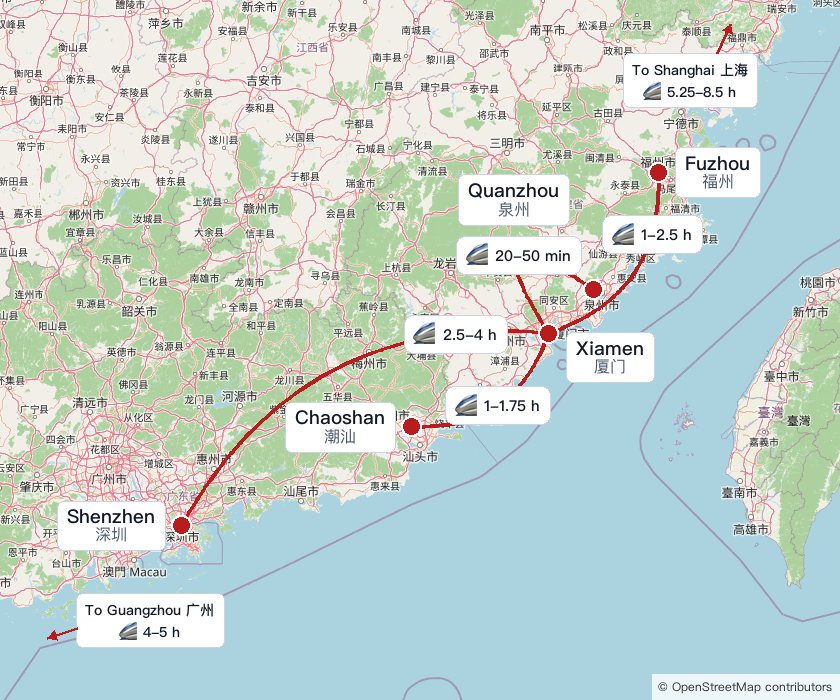
High-speed rail times from Xiamen to Quanzhou, Fuzhou, Chaoshan, and Shenzhen. Guangzhou and Shanghai are shown as directional references; the full set of routes remains in the table below.
Train times vary considerably by service. Search both Xiamen and Xiamenbei in Railway 12306, then compare the station transfer as well as the time on the train.
| Route | Best option | Travel Time | Notes |
|---|---|---|---|
| Xiamen (厦门) -> Quanzhou (泉州) | High-speed train | 20-50 minutes | A very easy add-on for temples, historic streets, and maritime history. |
| Xiamen (厦门) -> Fuzhou (福州) | High-speed train | 1-2.5 hours | Fast G-trains use the newer coastal high-speed line; slower services take longer. |
| Xiamen (厦门) -> Chaoshan (潮汕) | High-speed train | 1-1.75 hours | The station serves the wider Chaozhou and Shantou area, so allow for an onward local transfer. |
| Xiamen (厦门) -> Shenzhen (深圳) | High-speed train | 2.5-4 hours | The practical southbound rail route through eastern Guangdong. |
| Xiamen (厦门) -> Guangzhou (广州) | High-speed train or flight | 4-5 hours by rail | Rail works well when the departure and arrival stations suit your hotels. |
| Xiamen (厦门) -> Shanghai (上海) | High-speed train or flight | 5.25-8.5 hours by rail | Flying is often more practical unless the train schedule fits the wider itinerary. |
Getting around
Foreign visitors can activate the Xiamen Public Transport QR code through Alipay's Transport feature. It covers the metro, BRT, regular buses, and participating residential ferry routes. Gulangyu tourist ferries require their own real-name ticket.
The metro is best for the larger moves. Line 1 connects Xiamenbei, Jimei, and the western side of the city center; Line 2 serves the International Cruise Center used by many Gulangyu ferries; Line 3 serves Xiamen Railway Station and the eastern side of the island. The network does not yet cover the southern coast particularly well, so a bus or Didi is often faster for Baicheng, Hulishan, Zengcuo’an, and the most useful sections of Huandao Road.
The BRT is a useful second rapid-transit network rather than an ordinary bus. It has elevated lanes across much of the island and directly serves Gaoqi Airport T4. Regular buses fill the remaining gaps; Bus 29 is especially useful along the southern coast.
Metro stations have entrance security checks, including bag scanners. Add a few minutes at large stations and keep liquids accessible if staff ask to inspect them. Taxis and Didi are widely available, but drivers rarely speak English, so use the Chinese place name and check that the pickup point is on the correct side of a large station or divided road.
Xiamen’s map can be misleading. Several central sights sit close together, but the long coast, northern neighborhoods, ferry terminals, and Jimei are separate travel zones. Use public transport for the larger moves, then walk within compact clusters such as Nanputuo and Xiamen University, Zhongshan Road and Bashi, or Baicheng and Hulishan.
Gulangyu ferry
The ferry is the one piece of Xiamen planning that should never be improvised. Visitor routes do not necessarily use the same mainland terminal as local commuter services, and the arrival pier on Gulangyu changes which part of the island you encounter first. Foreign-passport procedures deserve a separate check rather than assuming an identity-card workflow will work.
- Advance booking window: book 1 to 15 days ahead on the official 屿见厦门 WeChat mini-program, and slots sell out fast on weekends and in school holidays
- Foreign-passport booking: foreign-passport holders book the same way through 屿见厦门 with their passport number, and the original passport is scanned at the gate
- Mainland departure piers: tourists sail by day from the 邮轮中心厦鼓码头, with a second daytime option from 嵩屿码头 in Haicang, and at night from the 厦门轮渡码头 next to Zhongshan Road; locals use the cheaper 厦门轮渡码头 and 第一码头 resident routes
- Gulangyu arrival piers: daytime ferries land at 三丘田码头, near the shops and the famous corner, or at 内厝澳码头 on the quieter west end; night sailings use 三丘田码头
- Ferry fares: the standard tourist ferry is CNY35 round trip, return included and valid 20 days, with a pricier sightseeing option; the resident route costs CNY8
- Ferry timetable and service frequency: daytime ferries from 邮轮中心厦鼓码头 run roughly every 20 minutes from about 07:10 until mid-afternoon, later in summer, on a crossing of about 20 minutes; a night service from 厦门轮渡码头 keeps running into the small hours, so you can reach or leave the island late
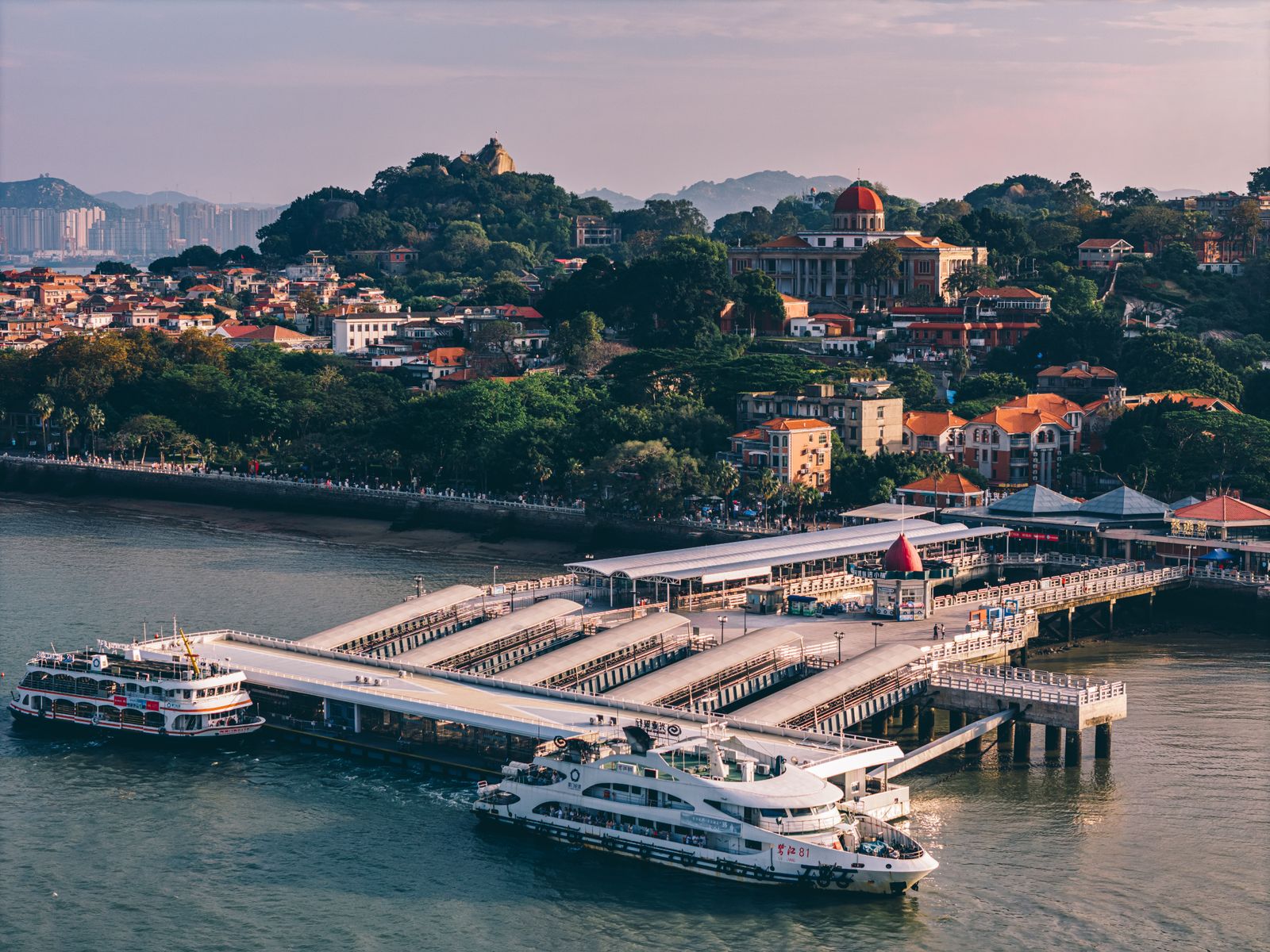
Photo: toter yau, via Pexels
Key Attractions
Xiamen’s main sights fall into three practical zones: Gulangyu across the harbor, the dense group of city and coastal sights on Xiamen Island, and Jimei across the water to the north. The overview map shows how far these zones sit from one another; the city map enlarges the places that can be combined more easily on the main island.
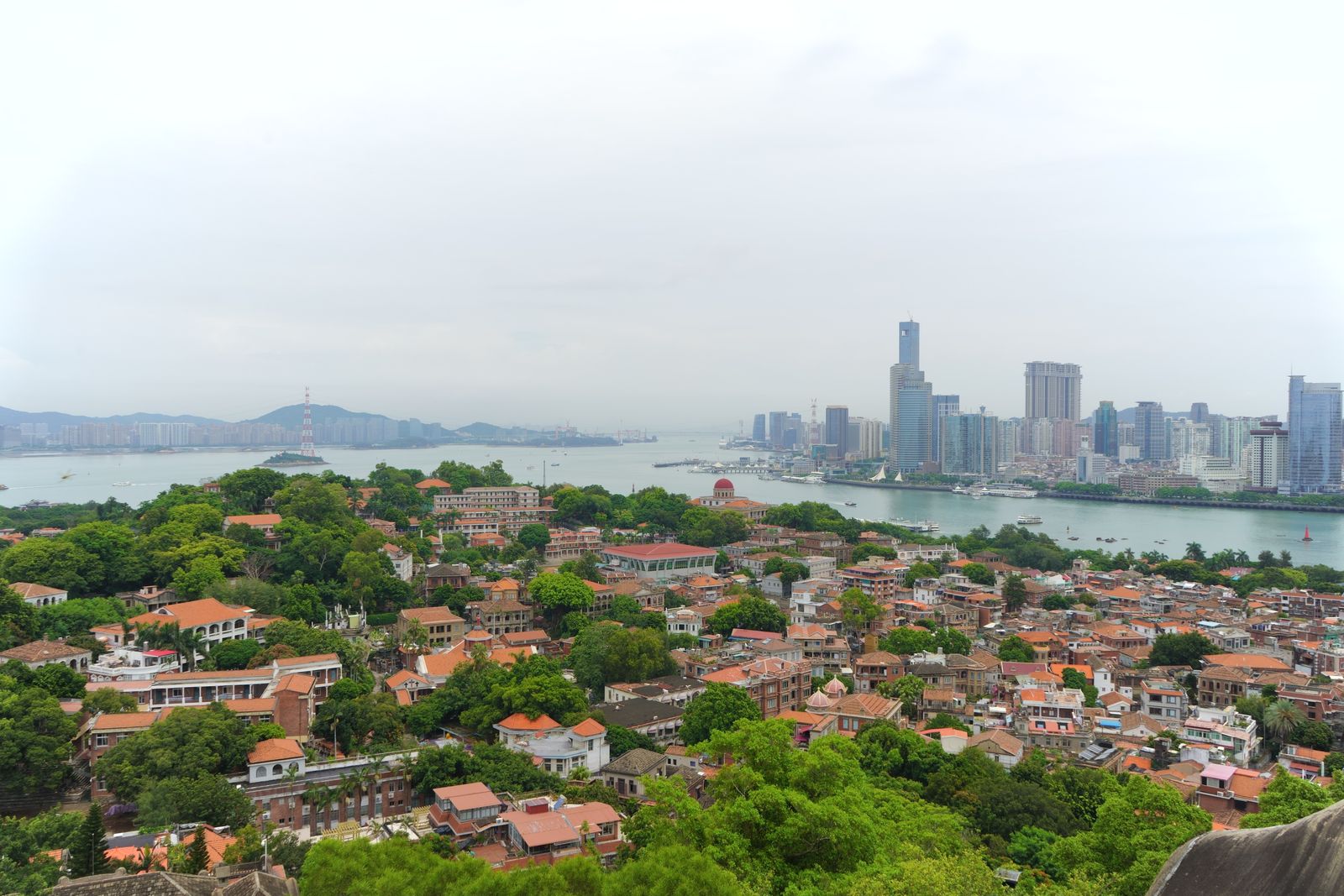
Photo: bin bin, via Pexels

1. Gulangyu (鼓浪屿)
Getting there: tourists take the ferry from 邮轮中心厦鼓码头 (Xiamen International Cruise Center) on the west side of the island, reached by Metro Line 2 to 邮轮中心 station, by bus, or by taxi
Admission: the island itself is free; you pay only for the ferry, with an optional CNY90 through ticket covering the main sights (Sunlight Rock, Shuzhuang Garden, Haoyue Park, and the instrument museums)
Time needed: Half a day for a selective walk; a full day if you add the paid sights and linger
Gulangyu is Xiamen’s most famous sight and its most uneven one. The island’s value lies in its hilly lanes, subtropical gardens, sea-facing villas, churches, and institutions devoted to its musical heritage. The busiest shopping streets can feel like a conventional tourist town, but the atmosphere improves quickly once you leave the main commercial flow and enter the residential slopes.
For a first visit, it is still worth the ferry. Go for the architecture and the experience of moving through an island without ordinary road traffic, not for every attraction sold as a must-see. A selective route is far more rewarding than collecting tickets or queuing for every social-media photo spot.
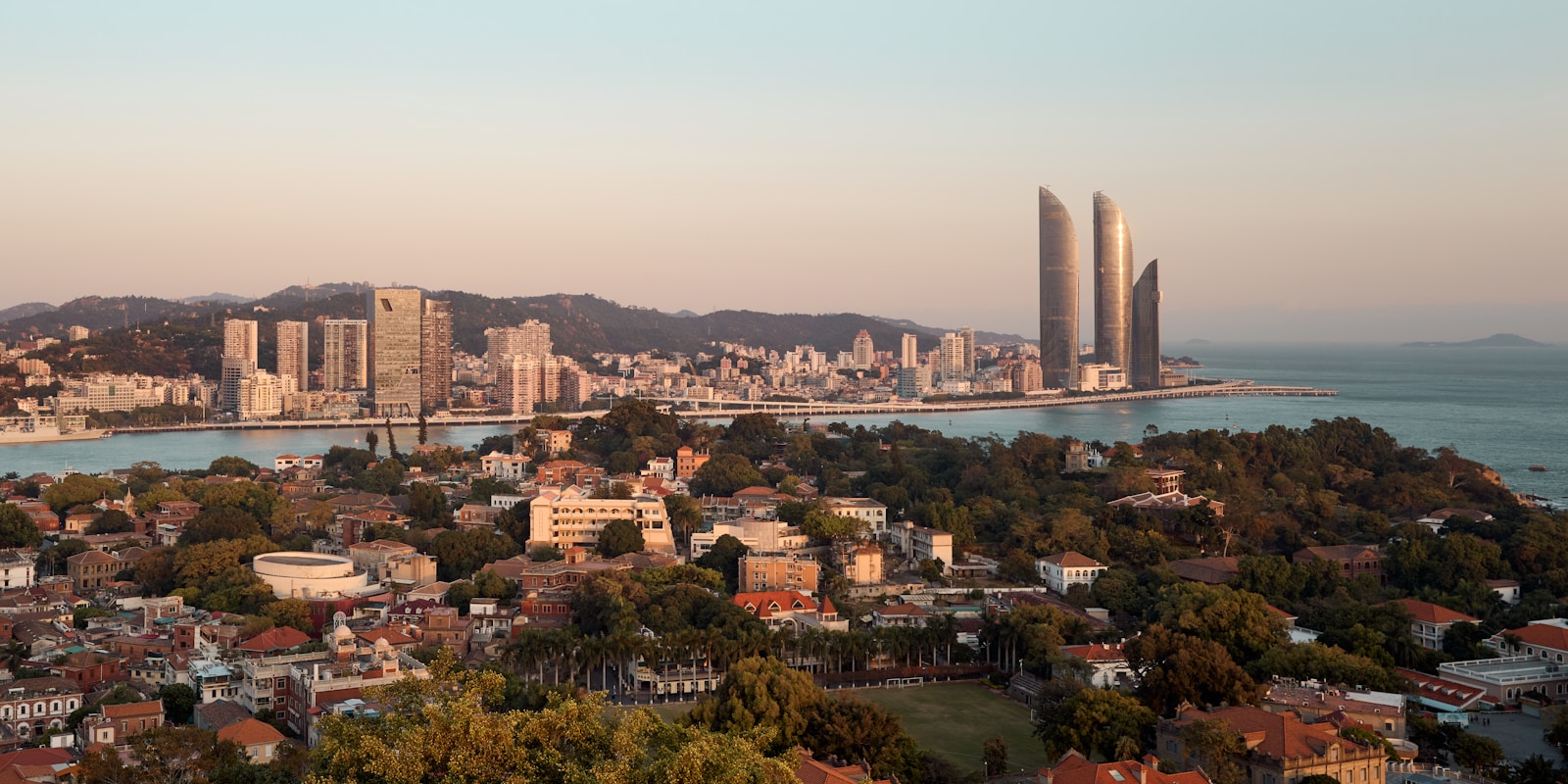
Photo: Letian Zhang, Unsplash
What to see
- Bagua Mansion and Organ Museum (八卦楼 / 风琴博物馆) The red-domed mansion is both an island landmark and one of the clearest introductions to Gulangyu’s musical identity. The approach through the surrounding villa streets is part of the pleasure, and several notes found the area especially attractive once the larger crowds thinned.
- Organ Art Center (鼓浪屿管风琴艺术中心) This is more than a photo stop. Travelers who heard the instrument described the performance as one of the island’s more memorable indoor experiences, which also makes it a useful retreat when heat or rain makes the lanes tiring.
- Sunlight Rock (日光岩) The island’s classic high viewpoint gives the clearest overview of red roofs, trees, sea, and the Xiamen skyline. The final approach is steep and the summit area is cramped, so the view is stronger than the experience of queuing for it.
- Shuzhuang Garden (菽庄花园) This compact seaside garden combines rockwork, framed water views, and access to the Piano Museum. Reactions in the notes were mixed: architecture and garden enthusiasts may enjoy it, while travelers expecting a grand classical garden may prefer simply wandering the island.
- Haoyue Garden (皓月园) The garden is organized around the monumental statue of Zheng Chenggong and a waterfront view back toward Xiamen. It fits naturally into a coastal walk, though the open setting can feel exposed in strong sun.
- Catholic Church (天主教堂) The modest church and nearby Christian buildings help explain the island’s unusually cosmopolitan architectural landscape. They are better appreciated as part of the surrounding streets than as isolated photo props.
Caution
Gulangyu demands more walking than the map suggests. The lanes climb continuously, ordinary vehicles are absent, and luggage makes an overnight stay much less romantic than it sounds. Crowds and tour groups concentrate around the main arrival routes and famous photo spots, while food, souvenirs, seafood, and unofficial guiding are often priced for a captive audience. Comfortable shoes and a selective route matter more than completing a list.
2. Xiamen University (厦门大学)
Getting there: no metro reaches the campus yet; the nearest is Line 1 at 镇海路, then a short bus (1, 21, 45, or 841) or taxi, and other buses stop at 厦大西村 and 厦大医院
Admission: free, but entry is by reserved time slot only, and you must leave through an open campus gate before closing
Time needed: 1 to 2 hours within your reserved time slot
Visitor reservation: reserve free through the official 厦门大学访客预约 system (the 参观厦大 WeChat mini-program); registration opens at midnight up to three days ahead and a lottery picks visitors, and foreign-passport holders must present the original passport for manual verification on entry
Visitor entrance and admission periods: all visitors enter only through the dedicated visitor lane at the new south gate at their reserved time, with no walk-ins and no re-entry; visits pause during the freshman orientation period in late August and early September
Xiamen University is a working campus that happens to occupy one of the city’s finest settings. Red-roofed Jiageng-style buildings sit between wooded hills and the sea, with lakes and mature landscaping softening the institutional scale. It is attractive, but it should never become the hinge on which an entire day depends: visitor access is controlled, and travelers in the notes were turned away when reservations or group details did not match.
If entry does not work out, the setting is still legible from outside. Nanputuo’s back hill provides a broader view of the campus than many paths inside it, while Baicheng Beach and Shapowei continue the same sea-facing route.
What to see
- Furong Lake (芙蓉湖) The lake is the campus’s most composed scene, with water, trees, black swans, and Jiageng-style buildings reflected together. It gives a quick sense of why the university is treated as a scenic attraction.
- Furong Tunnel (芙蓉隧道) Student murals turn this long campus passage into a changing record of university life. The tunnel is popular and commercial stalls near the entrance are less interesting than the artwork itself.
- Lu Xun Memorial Hall (鲁迅纪念馆) This is the campus stop with the strongest literary context. It adds substance to a visit that can otherwise become a sequence of attractive buildings and photo locations.
- Shangxian Field (上弦场) The open athletic ground and surrounding historic campus architecture reveal the university at a larger scale than the lakeside paths. Include it if your permitted route reaches this part of campus.
Caution
Do not arrive expecting to negotiate your way through the gate. The notes describe strict identity checks, reservation failures, and cases where a group could not enter because the primary reservation holder was absent. Treat access as uncertain until the official process is confirmed. If you cannot enter, move on to Nanputuo or the coast rather than losing the day at the gate.
3. Nanputuo Temple (南普陀寺)
Getting there: beside Xiamen University, reached by bus to the 厦大(南普陀) or 厦大西村 stops or on foot from the campus; the nearest metro is Line 1 at 镇海路
Admission: free, but a same-day time slot must be reserved on the temple's official 南普陀寺预约 platform, which costs nothing; open daily 08:00-18:00
Time needed: An hour for the main halls, longer if you climb the hill behind
Nanputuo is both an active Buddhist temple and the most useful hinge in Xiamen’s central sightseeing area. Its halls and incense courtyards sit directly below wooded slopes, with Xiamen University and the coast close by. A short visit can focus on the main devotional axis; a more rewarding one continues past the stone inscriptions and climbs until the city opens below.
The temple can feel busy, but it has more cultural depth than many of Xiamen’s commercial streets. Vegetarian food and the well-known temple pastries also make it an easy place to pause before or after the climb.
What to see
- Mahavira Hall (大雄宝殿) This is the central worship hall and the architectural focus of the main temple sequence. Observe it as a living religious space rather than a decorative backdrop.
- Great Compassion Hall (大悲殿) The hall is another major devotional stop on the central route. Its atmosphere makes more sense when seen alongside the worship practices continuing around it.
- Release Pond (放生池) Water, lotus, birds, and the surrounding halls create one of the temple’s gentler foreground views. It is also where visitor congestion is most visible during busy periods.
- Cliff Inscriptions (后山摩崖石刻) The inscriptions mark the transition from formal courtyards to the wooded back hill. They add a historical layer that is easy to miss if you stop after the main halls.
- Large Fo Character (佛字石刻) The oversized Buddhist character is the most immediately legible of the stone carvings and a useful point for understanding how the religious landscape extends beyond the buildings.
- Wulao Peak (五老峰) Continue uphill for a broader view over Xiamen University, the Twin Towers, and the coast. The climb changes Nanputuo from a compact temple visit into a hill walk and should be treated accordingly.
Caution
The lower courtyards can be very crowded, and the climb behind them is a real hill route rather than a casual extension of the temple. Dress respectfully, do not photograph worshippers or sacred images without permission, and avoid treating incense or ritual practice as staged entertainment. The quieter atmosphere begins above the busiest halls, but only continue if heat, footwear, and energy make the climb sensible.
4. Xiamen Botanical Garden (厦门园林植物园)
Getting there: the main gate is on Huyuan Road near Zhongshan Park, about a five-minute walk from Metro Line 1's Zhongshan Park station
Admission: CNY30 (CNY15 concession, free for children under six and over-65s), open 06:30-18:00 in summer and 06:30-17:30 in winter; the nearby 钟鼓索道 cable car is CNY80 round trip
Time needed: 2 hours for the highlights (rainforest and succulents); half a day if you add the cableway or deeper walks
The botanical garden spreads across a substantial hillside, and its quality varies with your interests. Most first-time visitors come for the dense rainforest setting and the large succulent collection. Those two areas provide the strongest visual contrast and are enough for travelers with limited energy; the rest becomes worthwhile if you genuinely enjoy botany, wooded walking, or linking the garden with Nanputuo.
What to see
- Succulent Garden (多肉植物区) Giant cacti and sculptural dry-climate plants create the garden’s most distinctive landscape. Even travelers who found the collection less impressive than expected agreed that it is visually different from the rest of Xiamen.
- Tropical Rainforest Area (热带雨林区) Dense planting, old stone paths, and humid air create the garden’s lushest section. Artificial mist is part of its social-media appeal, but the mature vegetation is the better reason to visit.
- Araucaria Lawn (南洋杉草坪) This open lawn gives relief after the enclosed rainforest paths. Tall trees and broader views make it a natural rest point rather than another item to rush through.
- Wanshi Hancui (万石涵翠) The landscape here is quieter and more conventionally garden-like, with rock, water, and vegetation arranged around the contours of the hill.
- Climbing Plant Garden (藤本植物园) This section matters mainly to walkers because it connects with the higher routes toward Wulao Peak. It is less of a standalone display than part of the transition between garden and mountain.
- Zhonggu Cableway (钟鼓索道) The ride passes above forest and opens toward the city, sea, and Twin Towers. It can be the scenic finale to the garden, but exposed cabins and height make it a poor choice for nervous riders.
Caution
The garden is too large to cover casually without fatigue. Choose an entrance and a few target areas before arriving; a route designed for photographs may involve more climbing, mud, humidity, and waiting than the finished images suggest. Paths can be slippery after rain, and the cableway may be uncomfortable for anyone sensitive to height or older equipment.
5. Hulishan Fortress (胡里山炮台)
Getting there: on the coastal road past Baicheng Beach, beside Xiamen University, reached by bus to the 胡里山 stop or on foot from the campus along the boardwalk
Admission: CNY25, with reduced tickets for students and seniors and free entry for over-65s; open 08:00-18:00, with a cannon-firing ceremony at 10:00 and 16:00
Time needed: 2 to 3 hours, more if you wait for a performance
Hulishan is the coast’s historical counterweight to Xiamen’s beaches and cafes. The fortified compound preserves the logic of a sea-defense position, with gun emplacements, walls, and views across the water. It is most useful for travelers interested in military or treaty-port history; others can treat it as an optional stop between Baicheng and the quieter waterfront farther east.
What to see
- The coastal battery
Walk the defended edge to understand why this headland mattered. Sea views and fortifications make more sense together than either does in isolation. - The main gun emplacement
The large artillery installation is the site’s visual focus and the clearest evidence of the scale at which the battery was designed. - Fort walls and barracks
Smaller structures, passages, and walls give the compound texture beyond its headline weaponry. Look for how circulation and sightlines were organized around defense. - The sea-facing walk
The elevated edge provides a useful transition back to the modern coast. Continue toward Baicheng or the waterfront rather than treating the fortress as a disconnected excursion.
Caution
The evidence for Hulishan is thinner than for Xiamen’s major sights. The site is clean and historically legible, but it may feel specialized if military history does not interest you. Combine it with the coast so that the visit does not consume a separate journey, and expect open, sun-exposed areas rather than extensive shade.
6. Baicheng Beach (白城沙滩)
Getting there: buses stop at 厦大白城 on the coastal road, a short walk from both Xiamen University and Hulishan Fortress
Admission: free, an open public beach with no gate or hours
Time needed: A flexible stop of half an hour or more, with a couple of hours if you wait for sunset
Baicheng is not Xiamen’s quietest or most pristine beach, but it is the easiest coastal pause to combine with the university, Hulishan, and Shapowei. Its appeal is urban rather than remote: students, walkers, cyclists, the skyline, and the sea all share the same edge. Come for changing light and the continuity of the waterfront, not for a secluded resort-beach experience.
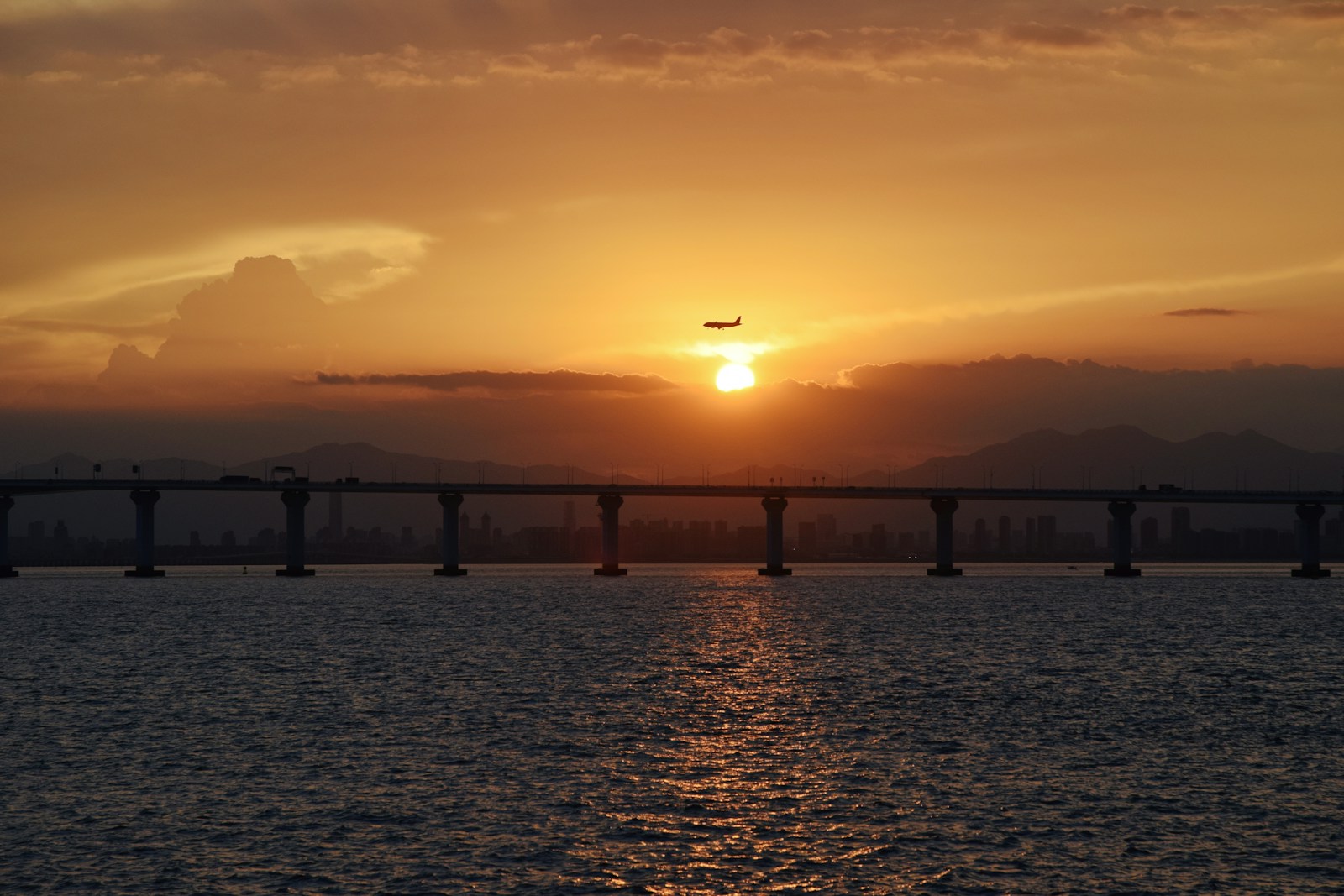
Photo: Ryan Wu, Unsplash
What to see
- The sunset view
Clear evenings bring warm light across the water and the city skyline. Several notes treated sunset as the beach’s strongest moment. - The Twin Towers skyline
The towers give Baicheng a recognizably urban horizon and become more prominent as the light fades. - The coastal path
Walking beyond the busiest sand connects Baicheng with Hulishan and longer sections of Huandao Road. The route is often more satisfying than staying in one crowded patch. - Everyday beach life
The beach works as a piece of the city: students, families, vendors, and cyclists create a lively local scene even when the sand itself is unremarkable.
Caution
Baicheng becomes crowded because it is convenient. If the sky is flat or the shore is packed, do not force the experience; continue east to a quieter stretch such as Pearl Bay or Huangcuo. Wind and temperature can change quickly at the water, while strong sun remains a concern even when the air feels mild.
7. Huandao Road (环岛路)
Getting there: bus 29 runs the length of the coastal road, and bicycles are rented at Baicheng and Pearl Bay for the flat, dedicated cycle lane
Admission: free, an open public road along the coast, walkable or cyclable at any time
Time needed: 1.5 to 2 hours by bike for one good stretch, longer with beach stops
Huandao Road is best understood as a string of coastal choices, not a single attraction. Beaches, lawns, cafes, political landmarks, and photo installations appear along a long shoreline. Pick a section based on the light and the kind of stop you want, then walk or ride between nearby points. Trying to complete the entire list turns a relaxed coast into a transport exercise.
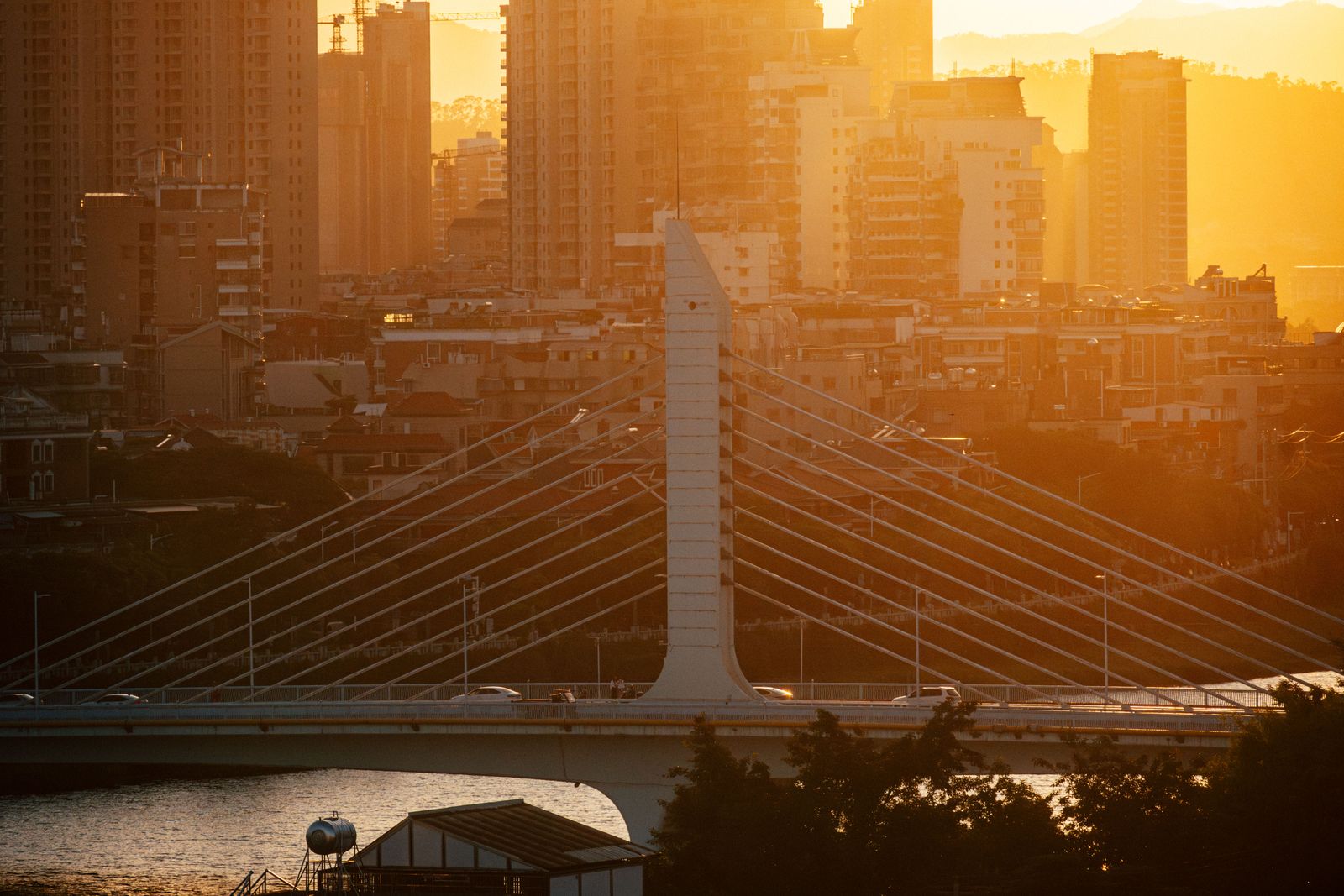
Photo: Bryanken, via Pexels
What to see
- Huangcuo Beach (黄厝沙滩) A broad horizon and fewer central-city crowds make Huangcuo the most consistently recommended beach in the notes, especially when the sky is clear.
- Wanyuepo (玩月坡) Grass, sea views, cafes, and small bars give this stretch a softer, more social character. It suits a pause or picnic better than a rapid photo stop.
- Yefengzhai (椰风寨) Farther along the coast, palms and open shore create a more resort-like scene. Some installations are designed mainly for photographs, but the space can feel easier than Baicheng.
- Music Square (音乐广场) Seating and a broad sea-facing edge make this a practical break on a coastal ride. Its appeal lies more in the setting than in any single monument.
- One Country, Two Systems Sign (一国两制标语) The large political slogan facing the Taiwan Strait is one of the coast’s most distinctive landmarks for an international visitor. Treat it as part of the modern cross-strait landscape rather than a conventional scenic attraction.
- Pearl Bay (珍珠湾) This quieter section offers sand, sea, and cafes without Baicheng’s constant intensity. It is a useful alternative for an evening walk.
Caution
Roadside tours, informal vehicle rentals, and aggressively marketed photo stops are the weak side of Huandao Road. Use a reputable rental service, inspect the vehicle, understand where it may be returned, and do not let a driver rewrite your route around shopping stops. Distances are longer than a sequence of map pins suggests, so choose one coastal section rather than chasing every named beach.
8. Mountains-to-Sea Trail (山海健康步道)
Getting there: the 23 km trail runs from the cruise terminal area to Guanyin Mountain, with entrances at Metro Line 2's 邮轮中心 and 建业路 stations and dozens more along the way
Admission: free, open 06:00-22:00, pedestrians only, with no bikes or scooters
Time needed: 1 to 2 hours for a typical selected section (3.5 to 7 km); the full trail is a much longer undertaking
The Mountains-to-Sea Trail offers a perspective the beaches cannot: coastline, reservoirs, city, and wooded hills seen from above. One note ranked it as the most impressive experience in Xiamen because the elevated views felt larger and more dramatic than the familiar seafront photographs. The network is extensive, so it works best when you choose one scenic segment rather than treating the full trail as a single walk.
What to see
- Linhai Trail (林海健康步道) This greener branch links wooded slopes with views toward the coast. It is the best expression of the trail’s promise to connect mountain and sea.
- D18 Entrance (山海健康步道 D18入口) Notes repeatedly used this entrance for a scenic coastal segment. Treat it as a practical route anchor rather than assuming every entrance provides the same landscape.
- Shangli Reservoir (上李水库) Water, lawns, and surrounding greenery provide a quiet inland contrast to the sea. It works well as the softer end of a trail outing.
- The elevated coastal view
The defining experience is the shift from enclosed vegetation to a broad view over city and water. Allow yourself to stop; the landscape loses its impact if the route becomes another exercise in collecting pins.
Caution
The trail name describes a network, not one short promenade. Entrances, exits, shade, and transport vary by segment, and a route that looks compact online can involve sustained climbing. Carry water, protect yourself from the sun, and decide how you will leave the trail before starting. Avoid committing to the full network simply because an individual section is easy.
9. Zengcuo’an (曾厝垵)
Getting there: buses stop at 曾厝垵 on the coastal road, and it is an easy walk or ride east along the beach from Baicheng
Admission: free, an open-air village of lanes with no gate or ticket, open all day
Time needed: An optional meal or evening stop rather than a stand-alone visit
Zengcuo’an was once a coastal village and is now one of Xiamen’s densest concentrations of guesthouses, snacks, souvenir shops, and inexpensive eateries. Its practical value is stronger than its sightseeing value. It can be a convenient base near the coast and an easy food stop, but visitors looking for an intact village will find a tourism district instead.
What to see
- The main snack lanes
A compressed survey of popular Xiamen snacks makes the central lanes useful for indecisive eaters, though quality and authenticity vary sharply. - Guesthouse streets
The large number of independently run stays gives the neighborhood a youthful travel atmosphere. Inspect recent reviews carefully because room quality and sound insulation are inconsistent. - The quieter side lanes
Step away from the brightest commercial strip to see fragments of the older village pattern and a calmer residential rhythm. - The link to Huandao Road
Zengcuo’an works best as a break within a coastal route. Eat, rest, and continue to the beach rather than building a whole sightseeing day around the village.
Caution
This is a heavily commercialized food and accommodation district, not a preserved village. Crowds, repeated snack menus, tourist seafood, and variable guesthouse standards are part of the experience. It is useful when it fits your route or lodging needs, but it should be the first place removed if your time in Xiamen is tight.
10. Zhongshan Road (中山路步行街)
Getting there: the pedestrian street is dead centre, off Metro Line 1 at 镇海路 station and a short walk from the 轮渡码头
Admission: free, an open-air pedestrian street that never closes, at its liveliest in the evening when the arcade lights come on
Time needed: Half a day if you include Bashi Market and the surrounding lanes; the street alone needs less
Zhongshan Road is Xiamen’s central commercial promenade, lined with arcaded buildings that recall the city’s maritime links and southern Fujian climate. The storefront mix is thoroughly modern and tourist-oriented, but the district remains useful as an evening base because food, transport, Bashi Market, and the waterfront all sit nearby.
Do not expect a rare historic quarter. Come for the arcades, street life, and the chance to move from the polished pedestrian street into rougher working-market lanes.
What to see
- Bashi Market (八市) The market has more local texture than the main shopping street, with seafood, produce, cooked snacks, and narrow lanes that still feel connected to everyday trade.
- Bayi Street (八一街) This adjoining food street expands the choice beyond the most visible tourist storefronts. Follow where local diners gather rather than relying only on viral shop names.
- Bay Park (海湾公园) The waterfront park is a calmer counterpoint to the shopping streets and works well when you want open space after eating.
- Xingfu Road (幸福路) Smaller shops, cafes, and changing street scenes make this a more relaxed detour than the main pedestrian spine.
- Zhenhai Road (镇海路) This is a practical transport and lodging axis beside the old commercial core. It also offers a useful approach to the arcaded streets without beginning in the busiest section.
Caution
The main street resembles the standardized pedestrian streets found in many Chinese tourist cities. Prices rise on the most visible blocks, surrounding streets are not fully pedestrianized, and Bashi’s working-market hygiene may be uncomfortable for sensitive visitors. Use the area for food and evening atmosphere, compare before buying seafood or souvenirs, and do not mistake popularity for quality.
11. Shapowei (沙坡尾)
Getting there: just south of Xiamen University, reached by bus to the 沙坡尾 or 厦大西村 stops, by Metro Line 1 to 镇海路 and then a walk, or on foot from the campus
Admission: free, an open-air harbour district with no gate or closing time
Time needed: A flexible stop of an hour or two for food, coffee, and the harbour views
Shapowei is a former harbor edge recast as a compact creative district. Old boats and the sheltered basin give it a physical identity, while cafes, snacks, design shops, and murals provide the contemporary reason to linger. It is pleasant as the final stop after Nanputuo, the university, or Baicheng, but too small and commercial to justify a dedicated journey for most visitors.
What to see
- Shapowei Art Zone West (沙坡尾艺术西区) Converted industrial and harbor spaces now hold design shops, temporary displays, cafes, and murals. The appeal is informal browsing rather than a major museum experience.
- Twin Towers skyline (双子塔) The towers rise immediately beyond the low harbor buildings and create Shapowei’s defining old-and-new city view. They are more compelling as part of this skyline than as a destination at their base.
- The harbor basin
Fishing boats, water, and weathered edges preserve enough of the old port to keep the district from feeling like a generic retail redevelopment. - Cafes and small shops
Shapowei is useful for an air-conditioned pause, dessert, or casual meal after a long outdoor route. Independent storefronts change often, so browse rather than traveling for one viral shop.
Caution
Shapowei is small and its tourist-facing streets can be completed quickly. Much of the old harbor has become a backdrop for consumption, so travelers uninterested in cafes, shops, or photography may find little reason to stay. Pair it with nearby sights and leave once the atmosphere starts to repeat.
12. Jimei School Village (集美学村)
Getting there: Metro Line 1 crosses the sea on the elevated "sea train" stretch and stops at 集美学村 station, a short walk from the village
Admission: the campus streets are free to wander; the 鳌园 park is free too, open 08:00-18:00, while the Jimei Memorial is free but closed Mondays
Time needed: About 2 hours for a compact architectural walk; an afternoon if you continue to the waterfront for sunset
Jimei is the guide’s outlier: a northern education district shaped by the philanthropy and architectural vision of Tan Kah Kee, rather than another main-island tourist neighborhood. Jiageng-style buildings, the Dragon Boat Pool, seafront parks, and student streets form a coherent area, but it requires a deliberate trip away from Xiamen’s central sights.
It is most worthwhile for travelers interested in modern Chinese education, overseas Chinese history, or architecture. The metro approach across the water is part of the experience; visitors going only for television-drama photo locations may find the district underwhelming.
What to see
- Former Residence of Tan Kah Kee (陈嘉庚故居) The residence gives a personal scale to the story of the overseas Chinese entrepreneur and educator whose patronage shaped modern Jimei.
- Tan Kah Kee Memorial Museum (陈嘉庚纪念馆) Use the museum to understand why the surrounding schools and parks share such a strong architectural identity. It is the district’s best source of historical context.
- Jimei Dashe (集美大社) The older neighborhood provides a less formal counterpoint to the monumental school buildings, with local streets and food woven into the visitor route.
- Jiageng Park (嘉庚公园) Seafront landscaping and memorial architecture make this the most composed outdoor section of Jimei.
- Dragon Boat Pool (龙舟池) The pool is the visual center of the school village, with Jiageng-style buildings reflected around the water.
- Shili Causeway (十里长堤) The open waterfront and passing rail views make the causeway a relaxed finish, especially when the weather supports sitting outside.
Caution
Jimei is spread out, and some travelers in the notes found its scenery ordinary after Gulangyu. Traffic and internal distances can erode the relaxed atmosphere if you try to collect every internet-famous stop. Go for Tan Kah Kee’s legacy and the architectural ensemble; skip it if those themes do not interest you or if the main island already fills your trip.
Suggested Itineraries
These modules combine into a three-day core rather than a long holiday. Take the core days in the order that fits your ferry booking and university reservation, and add the optional outings only if they match your interests and pace.
Day 1: 鼓浪屿
Keep Gulangyu separate from the main island. The ferry, steep lanes, indoor sights, gardens, and sea views are enough for one coherent outing. Start with your highest-priority viewpoint or museum, then allow the route to loosen through residential streets rather than racing between every promoted landmark.
Day 2: 厦大与南海岸
Xiamen University → Nanputuo Temple → Baicheng Beach → Hulishan Fortress → Shapowei
Use the university reservation as the fixed point. If access works, continue naturally through the temple, the beach, and the fortress; if it does not, begin at Baicheng and spend the saved energy on the coast. These stops sit in one walkable cluster, and Shapowei is a gentle evening finish for food and coffee.
Day 3: 园林与海岸大道
Xiamen Botanical Garden → Huandao Road → Zhongshan Road
Spend the morning in the botanical garden, take one worthwhile section of Huandao Road by bike or on foot in the afternoon, and finish around Zhongshan Road and Bashi Market for a denser evening. Zengcuo’an works as a lunch or rest stop if it fits your route.
If you have more time
- The Mountains-to-Sea Trail is a half-day outing for walkers: pick one segment with a clear entrance and exit and stop at the viewpoints.
- Jimei School Village is a separate trip across the water, worth making only if Tan Kah Kee, modern educational history, or Jiageng architecture interests you.
Where to Stay
Practical bases
Zhongshan Road and Zhenhai Road are the easiest first-visit base. They place food, Bashi Market, central transport, and the harbor within reach, and they remain active after the sightseeing day ends. The trade-off is traffic, noise, and a more commercial atmosphere.
The Xiamen University and Pearl Bay side of Siming District suits travelers who value the coast over nightlife. Guesthouses and small hotels can feel calmer, and evening walks by the water are easy. Check the exact bus access because the metro is less useful along parts of the southern coast.
Zengcuo’an has a large supply of guesthouses and budget-oriented rooms close to Huandao Road. It can be convenient, but quality varies widely and the busiest lanes are noisy. Read recent room reviews rather than booking only from styled photographs.
Gulangyu is worth considering only when sleeping on the island itself is part of the experience. Early and late hours can be atmospheric, but carrying luggage through steep pedestrian lanes is inconvenient and accommodation often costs more than comparable rooms on the main island.
Jimei is not the default base for a first visit. It works for a short transit stay or a trip focused on the northern districts, but it separates you from most of the attractions in this guide.
Where to Eat
Bashi Market and the streets around Zhongshan Road offer the broadest introduction to Xiamen food. Bashi has the strongest working-market atmosphere and many small eateries, while the main pedestrian blocks are easier but more tourist-priced. Compare seafood prices and choose established shops with clear ordering.
Shapowei is better for a relaxed meal, dessert, Taiwanese snacks, or a cafe break after the university and coast. It is more polished than Bashi and less useful if your priority is a traditional market meal.
Zengcuo’an puts many snacks and seafood restaurants in one compact area, but repetition and tourist targeting are obvious. It is convenient rather than essential.
Gulangyu has fish balls, oyster omelets, mochi, noodles, and abundant snack shops, but the island is a poor place to chase value. Eat what is convenient during the walk and save a serious seafood meal for the main island.
For vegetarian travelers, Nanputuo Temple is the most obvious anchor. Temple-style noodles, vegetarian dishes, and pastries provide a practical meal around the central sightseeing route. Halal travelers should search by the Chinese term 清真 and confirm kitchens directly, since the source notes do not provide enough evidence for specific recommendations.
Dishes to Try
- Shacha noodles (沙茶面): Wheat noodles in a rich, savory, slightly sweet satay-influenced broth, usually customized with seafood, tofu, offal, or meat.
- Oyster omelet (海蛎煎): Small oysters bound with egg and starch, crisp at the edges and soft inside.
- Ginger duck (姜母鸭): Duck braised with abundant ginger and aromatics until deeply flavored.
- Tusu jelly (土笋冻): A cold, translucent local specialty made from marine worms. The texture and English description divide visitors, but it is one of southern Fujian’s most distinctive foods.
- Five-spice rolls (五香条): Seasoned meat and vegetables wrapped in bean-curd skin and fried.
- Peanut soup (花生汤): A simple sweet soup with very soft peanuts, commonly eaten as dessert or a light snack.
- Fish balls (鱼丸): Bouncy fish paste balls, sometimes filled, served in a clear savory broth.
- Mochi and Fujian sweets (麻糍 / 满煎糕 / 烧仙草): Useful small snacks for sharing while exploring markets and pedestrian streets.
Hero photo: Sparktour, CC BY-SA 4.0, via Wikimedia Commons.
Help keep this guide accurate
Found something incorrect, outdated, or missing? Tell us what changed and include a source when possible.
Suggest an update