
On this page15 sections
✓ Prices and practical details last verified August 2, 2026
Shanghai is the easiest big city in China for a first-time visitor: two major airports, the country’s largest metro network, English signage in the center, and a walkable core where most of the famous sights sit within a few kilometers of each other. It is also two cities in one. West of the Huangpu River (浦西, Puxi) are the colonial-era riverfront, plane-tree streets, and lane-house neighborhoods; east of it (浦东, Pudong) is the skyline of glass towers built almost entirely since the 1990s. The classic Shanghai experience is simply moving between the two, whether on foot along the Bund, by metro under the river, or on a CNY2 commuter ferry.
Highlights
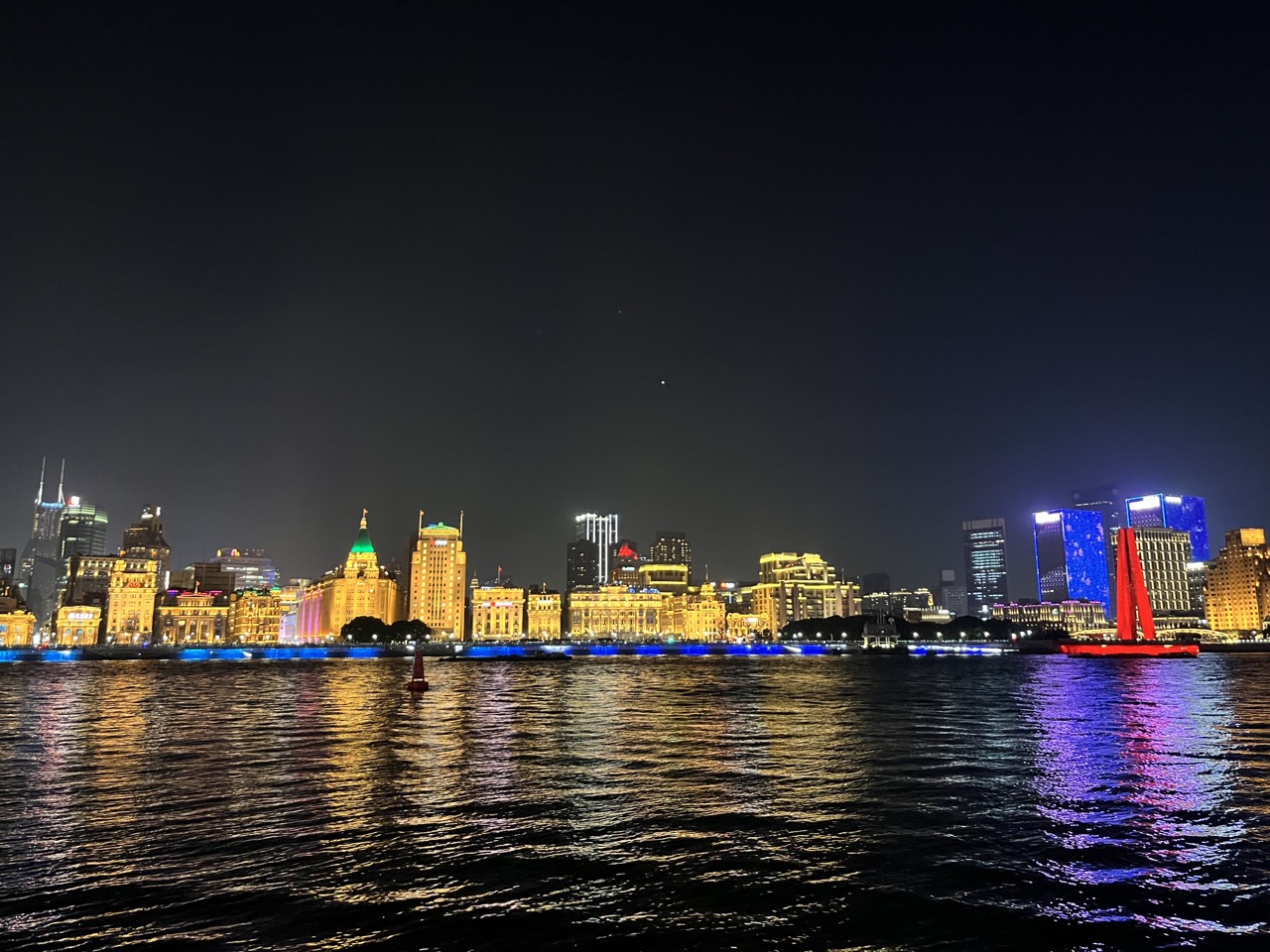
- Walk the Bund (外滩) at dusk, when the colonial facades light up behind you and the Lujiazui (陆家嘴) skyline switches on across the river.
- Go up the Shanghai Tower (上海中心大厦), the tallest building in China, for a view over the whole bend of the Huangpu.
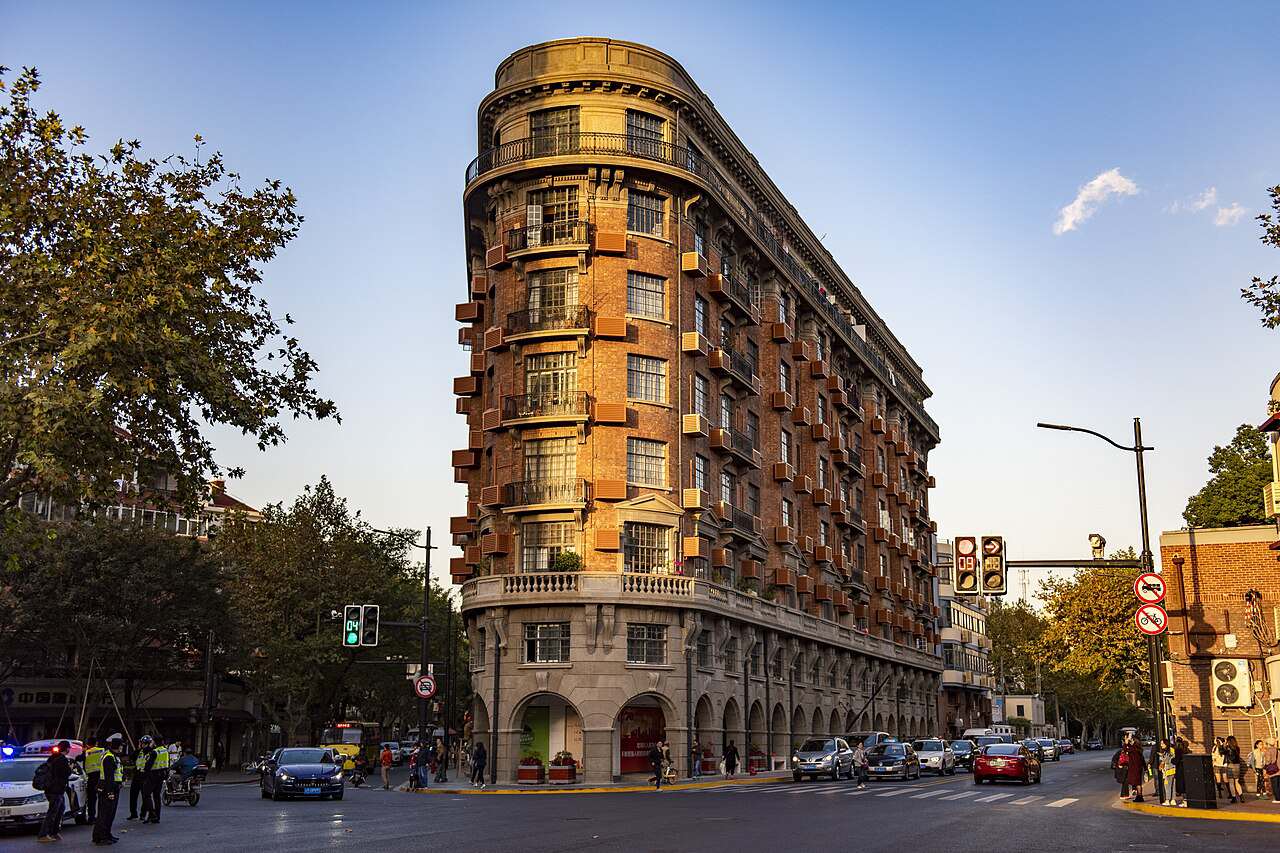
- Wander the Former French Concession (原法租界): plane trees, 1920s apartment blocks, and the photogenic Wukang Building (武康大楼).
- Eat your way through xiaolongbao (小笼包) and shengjian (生煎包), Shanghai’s two signature dumplings.
- Visit Longhua Temple (龙华寺) for an active neighborhood temple, inexpensive vegetarian noodles, and a Northern Song dynasty (960-1127) pagoda.
- Slow down for half a day in Zhujiajiao (朱家角), a canal town inside Shanghai’s own municipality.
Transportation
Two airports
Pudong International Airport (浦东国际机场 / PVG) handles most international flights and sits far east of the city. Check current direct routes on FlightConnections. The fastest way into town is the Maglev (磁悬浮): 7-8 minutes at up to 300 km/h to Longyang Road station, where you can transfer to the Metro. Tickets are CNY50 one-way, CNY80 round trip; CNY40 one-way if you have a same-day PVG flight ticket (show it at the counter — this discount isn't available at the automated machines). The maglev and metro are separate systems inside the same station, so the transfer means exiting through a fresh security check (bags through a scanner again) before you reach the Metro and vice versa. Budget a few extra minutes for it. Metro Line 2 also runs the whole way from the airport into the center, cheaper but 60-75 minutes. A taxi is roughly CNY170-220 and 45-70 minutes to the Bund area.
Hongqiao Airport (虹桥机场 / SHA) is mostly domestic and sits west of the city. It is closely integrated with Hongqiao Railway Station, making connections between flights and high-speed trains especially convenient. T2, the domestic terminal, is directly connected to the railway station and Metro Lines 2 and 10. It is a short walk with no transfer needed. T1, the international terminal (mainly short-haul city-center flights within East Asia, including Tokyo Haneda, Seoul Gimpo, Taipei Songshan, Hong Kong, and Macau), sits on the opposite side of the runway and is not directly linked; you’ll need the metro or the free inter-terminal shuttle bus to reach the railway station or T2. Factor that transfer in if you’re connecting to a train.
Connecting between the two airports no longer means a trip through the city center. The Airport Link Line (机场联络线), opened in December 2024, runs directly between Hongqiao T2 and Pudong T1/T2 in under 40 minutes. This dedicated rail line bypasses downtown entirely. It’s signposted as Suburban Rail (市域铁路) rather than the Metro, so look for that name at the station rather than a line number. Fare is CNY26 full journey; trains run every 15 minutes or so, roughly 6:00 to a last departure around 22:00. It is useful if you’re flying into one airport and out of the other, which happens more often than first-time visitors expect given how the two airports split international and domestic traffic.
Railway stations
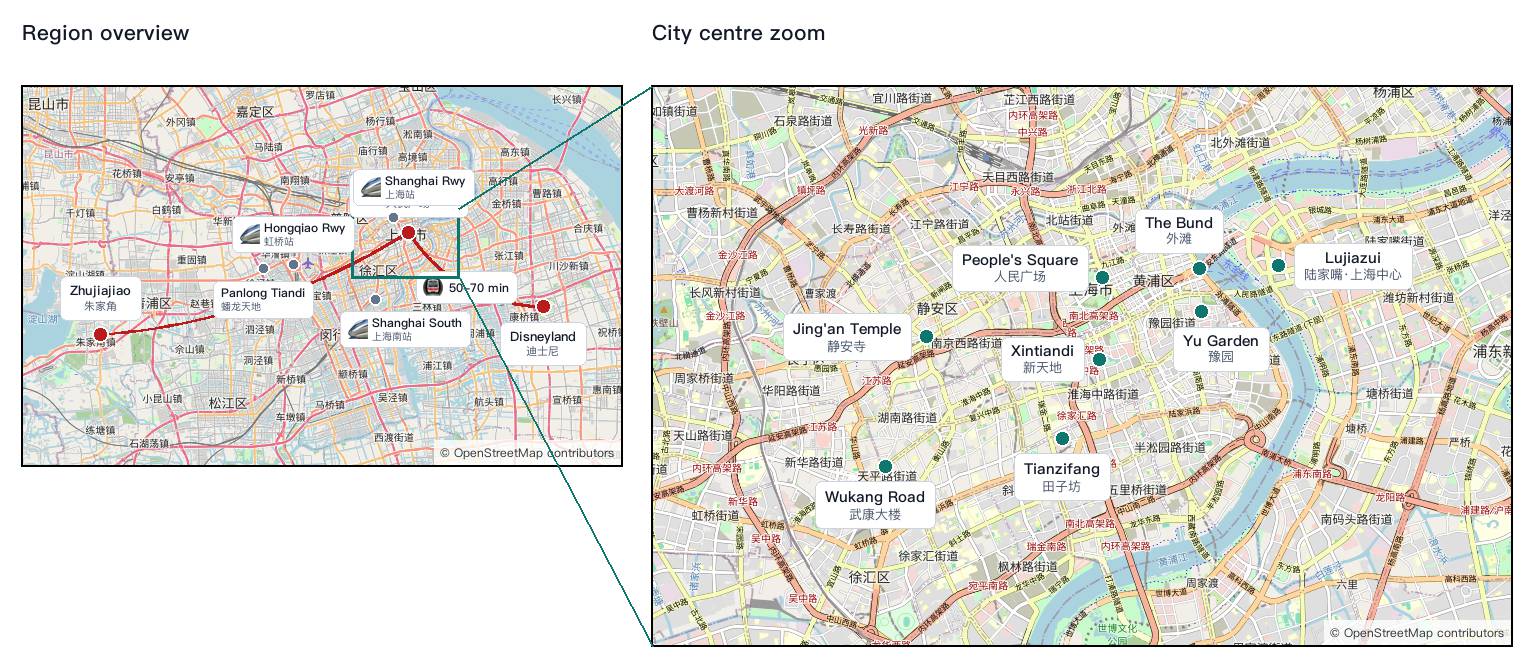
Hongqiao Railway Station (虹桥火车站) is the main high-speed rail hub, with the fastest and most frequent trains to Suzhou, Nanjing, and Beijing. Shanghainan (上海南站) is another smaller high-speed rail hub with many departures toward Hangzhou. Shanghai Railway Station (上海站) is the oldest and least modern of the three. Both Shanghai Railway Station and Shanghainan sit closer to the city center than Hongqiao, which can make them more convenient depending on your hotel. Always check which station your ticket uses, as the three are far apart.
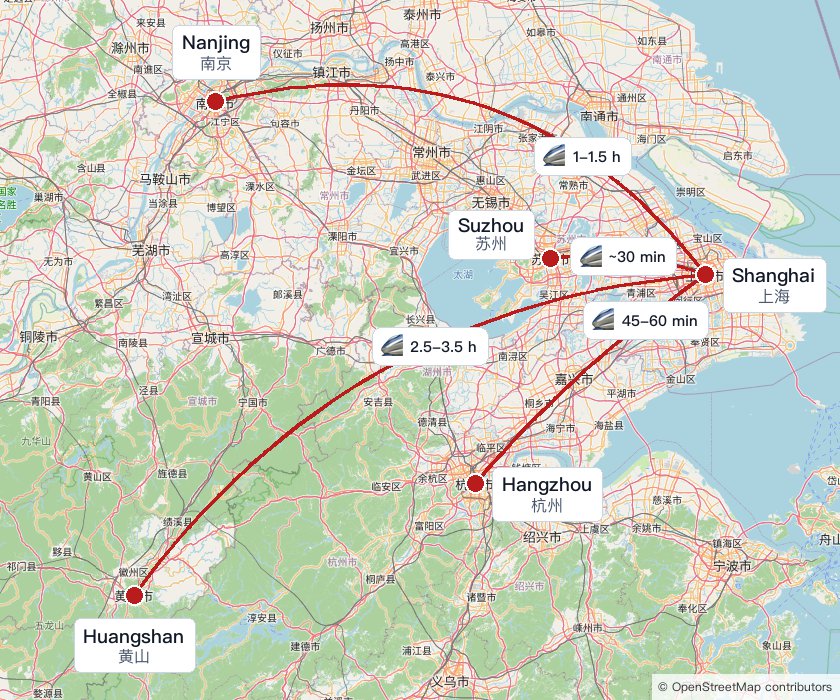
High-speed rail times from Shanghai to Suzhou, Hangzhou, Nanjing, and Huangshan. Most of these trains leave from Hongqiao Railway Station.
Common onward routes
| Route | Best option | Travel Time | Notes |
|---|---|---|---|
| Shanghai (上海) -> Suzhou (苏州) | High-speed train | 23-40 minutes | The easiest day trip from Shanghai; trains run every few minutes. |
| Shanghai (上海) -> Hangzhou (杭州) | High-speed train | 45-60 minutes | Most departures from Hongqiao; West Lake is a full-day trip. |
| Shanghai (上海) -> Nanjing (南京) | High-speed train | 1-1.5 hours | On the same Beijing-bound corridor as Suzhou. |
| Shanghai (上海) -> Huangshan (黄山) | High-speed train | 2.5-3.5 hours | For the Yellow Mountain scenery covered in our Huangshan guide. |
| Shanghai (上海) -> Beijing (北京) | High-speed train or flight | 4.5-6 hours by rail | The train is city-center to city-center and usually beats flying door-to-door. |
Getting around
The metro is the default way to move: the network is the largest in the world, signs and announcements are bilingual, and fares are CNY3-15 depending on distance. The easiest way to pay needs no app at all: Visa, Mastercard, Amex, JCB, and UnionPay contactless cards all tap directly at the gate, network-wide. If you’re relying on a foreign card, enable contactless/small-amount payments with your bank before you travel. Otherwise, a transport QR code in Alipay or WeChat, or the local Metro 大都会 app, works just as well. Every station has a security check at the entrance, and bags need to be scanned as they are at the airport. Build in a couple of extra minutes, especially at busy interchanges. Trains stop running around 22:30-23:30 depending on the line, earlier than many visitors expect.
Taxis and Didi (ride-hailing) are plentiful and reasonably priced, but drivers rarely speak English. Have your destination written in Chinese. For one specific trip, skip the metro entirely: the Jinling Road ferry (金陵东路轮渡) crosses from the south end of the Bund to Lujiazui for CNY2, and it is the cheapest skyline view in the city.
Key Attractions
Shanghai’s sights fall into two rings. The inner ring (the Bund, Yu Garden, Lujiazui, the Former French Concession, Xintiandi and Tianzifang, People’s Square, and Longhua Temple) fills two comfortable days, although Longhua sits south of the most walkable central cluster. The outer ring is a pair of half-day-to-full-day trips inside the municipality: the canal town of Zhujiajiao to the west and Disneyland to the southeast. The numbers on the map match the sections below. Click a numbered dot to jump to it.
1. The Bund (外滩)
Getting there: Metro Line 2 or 10 to East Nanjing Road (南京东路), then a 5-10 minute walk
Admission: Free, open around the clock
Time needed: 1-2 hours, ideally split between daylight and after dark
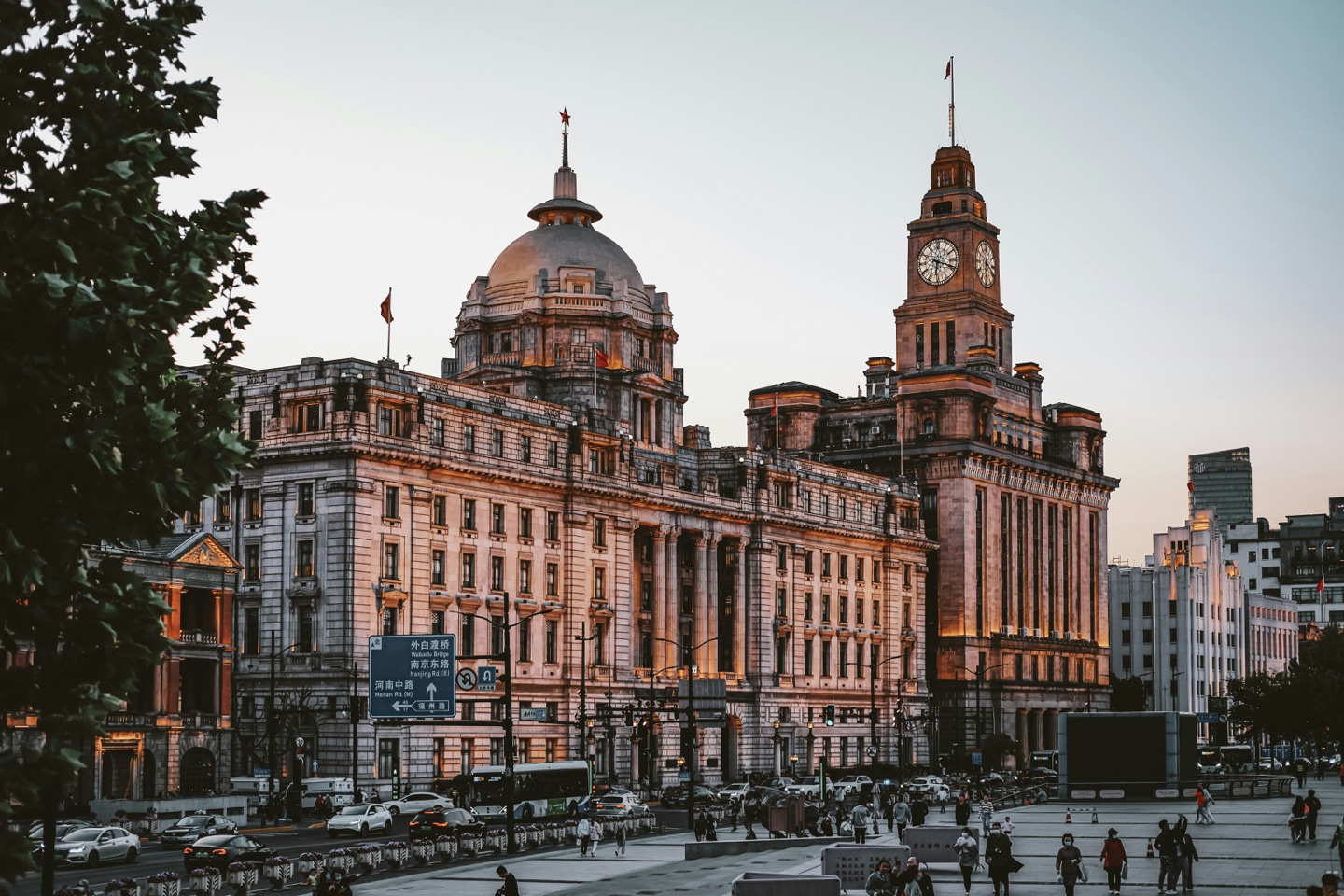
The Bund is a 1.5 km riverfront promenade lined with the banks, trading houses, and hotels of Shanghai’s 1920s-30s treaty-port era. This wall of neoclassical and Art Deco stone faces the glass towers of Lujiazui across the river. It is the one sight in Shanghai that genuinely rewards two visits: early morning for empty pavements, and evening when both riverbanks light up. Seasonally, lights come on at 18:00 and switch off at 22:00 from October to April, and 19:00 to 23:00 from May to September. The lights come on with a chime, and the moment when both banks switch on together is worth timing your arrival for, rather than just showing up to a skyline that’s already lit.
What to see
- The promenade itself
Walk south from the Waibaidu Bridge (外白渡桥) end toward Jinling Road. The elevated walkway keeps the river on one side and the full sweep of colonial facades on the other. - Fairmont Peace Hotel (和平饭店)
The green-pyramid-roofed Art Deco landmark at the corner of Nanjing Road. Non-guests can look at the lobby; the old jazz bar plays nightly. - Customs House clock tower (海关大楼)
Still chiming; the classic close-up of the Bund skyline. - Huangpu river cruise (浦江游览)
Boats leave from the south end of the Bund; a standard evening loop takes about 50-60 minutes and costs around CNY120-180 depending on operator and departure time. Skippable if you take the CNY2 ferry, but the night circuit is popular for a reason. - Suzhou Creek waterfront & Postal Museum (苏州河沿岸 / 上海邮政博物馆)
Where Suzhou Creek meets the Huangpu, right at the foot of Waibaidu Bridge, the walkway along the north bank is a quieter counterpoint to the Bund crowds. The standout building here is the 1924 Shanghai Postal Museum (上海邮政博物馆), still an active post office downstairs. The entrance itself is one of the best under-the-radar photo spots in the city, with a view that takes in both the creek and the Bund skyline. Admission free; open Tuesday to Sunday, 9:00-17:00 (last entry 16:00), closed Mondays. - North Bund (北外滩)
Cross Suzhou Creek past Waibaidu Bridge and the classic Bund view gives way to a quieter, more local riverfront. The main draw is the small dome-shaped structure (小巨蛋) on the riverside promenade near the cruise terminal. This reflective, sculptural landmark has become the area’s signature photo spot, lining up Lujiazui’s towers across the water. Right beside it on the waterfront, the Manner Coffee (国客滨江店) outpost has one of the best river views of any cafe in the city. Floor-to-ceiling windows on three sides provide an unobstructed view across the water, and a coffee here doubles as an excuse to sit and take in the skyline. - Shanghai Jewish Refugee Museum (上海犹太难民纪念馆)
A short taxi ride into Hongkou, in the former Tilanqiao neighborhood that sheltered roughly 20,000 Jewish refugees fleeing Europe in the 1930s-40s. The museum occupies a former synagogue and tells that history through the surrounding streets, which still carry traces of the “Little Vienna” community that lived here. Admission CNY20 (CNY10 for students, CNY15 for seniors); closed Mondays.
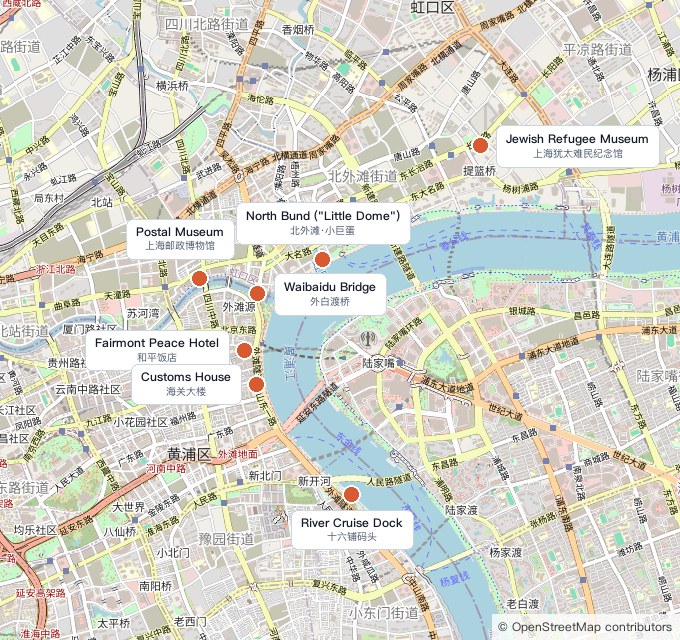
Interactive map of key spots along the Bund and North Bund.
Caution
The Bund and East Nanjing Road are the main hunting ground for Shanghai’s long-running “tea ceremony” and “art student” scams: friendly English-speaking strangers invite you to a teahouse or gallery, and the bill arrives with several zeros. Politely decline invitations from strangers here, however fluent and charming. Ordinary vendors and photographers are harmless but persistent.
2. Yu Garden & the Old City (豫园老城厢)
Getting there: Metro Line 10 to Yuyuan Garden (豫园) station
Admission: Garden CNY40 in peak season, CNY30 off-season; the surrounding bazaar is free
Time needed: 2-3 hours
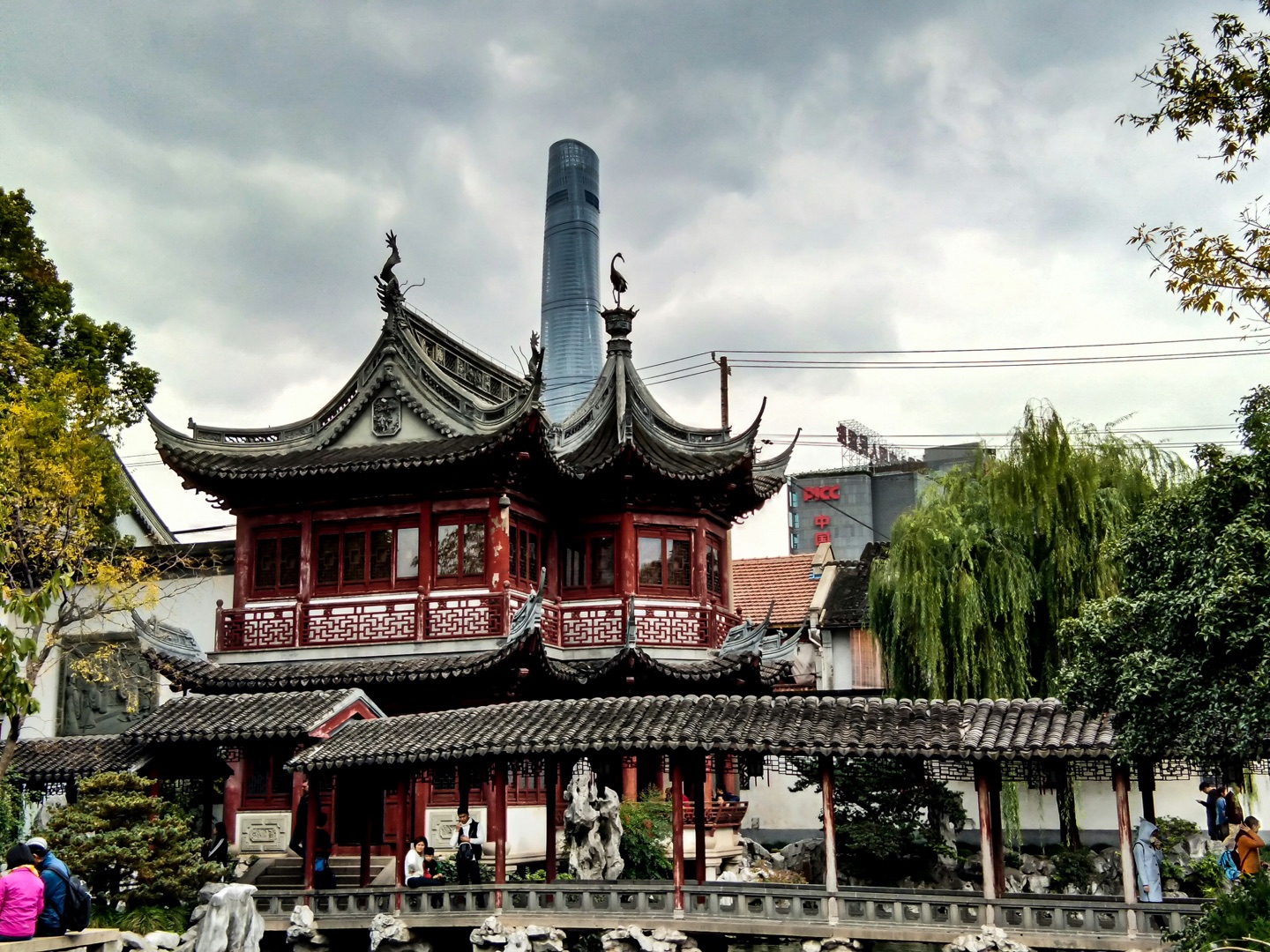
Yu Garden is a classical Jiangnan garden first laid out in 1559 by a Ming dynasty (1368-1644) official for his parents, with rockeries, ponds, zigzag bridges, and pavilions compressed into five acres. It sits inside the last remnant of Shanghai’s walled Old City, now wrapped in the Yuyuan Bazaar (豫园商城), a reconstructed shopping quarter of upturned eaves and gold signboards.
What to see
- The garden proper
Go at opening time if you can; by mid-morning tour groups fill the corridors. The Exquisite Jade Rock (玉玲珑) and the dragon-topped walls are the signature details. - Huxinting Teahouse (湖心亭)
The pavilion in the middle of the pond outside the garden gate, reached by the nine-turn Jiuqu Bridge (九曲桥), is one of the oldest teahouses in China and the classic photo of the area. - City God Temple (城隍庙)
A working Taoist temple that gave the whole district its colloquial name; locals still come to burn incense. - Old City backstreets
Walk a few blocks beyond the bazaar and the polish drops away into ordinary lane-house life. This is some of the last of it in central Shanghai, and it is disappearing fast to redevelopment.
What to eat
The bazaar is the traditional home of Nanxiang Steamed Bun Restaurant (南翔馒头店), the most famous xiaolongbao house in the city. Expect a serious queue at the takeaway window. Quality across the rest of the bazaar’s food stalls is uneven and prices run high; treat it as snacking theatre rather than a destination meal.
Caution
The garden is closed some Mondays outside holiday periods, and ticket sales stop before closing time. Check current opening days before making a special trip. During the Lantern Festival weeks after Chinese New Year, the bazaar switches to a separately ticketed lantern fair and gets extremely crowded at night.
3. Lujiazui Skyline (陆家嘴)
Getting there: Metro Line 2 to Lujiazui, or the Jinling Road ferry from the Bund
Shanghai Tower observatory: about CNY180 for adults (children and students discounted), open 08:30-21:30
Time needed: Half a day
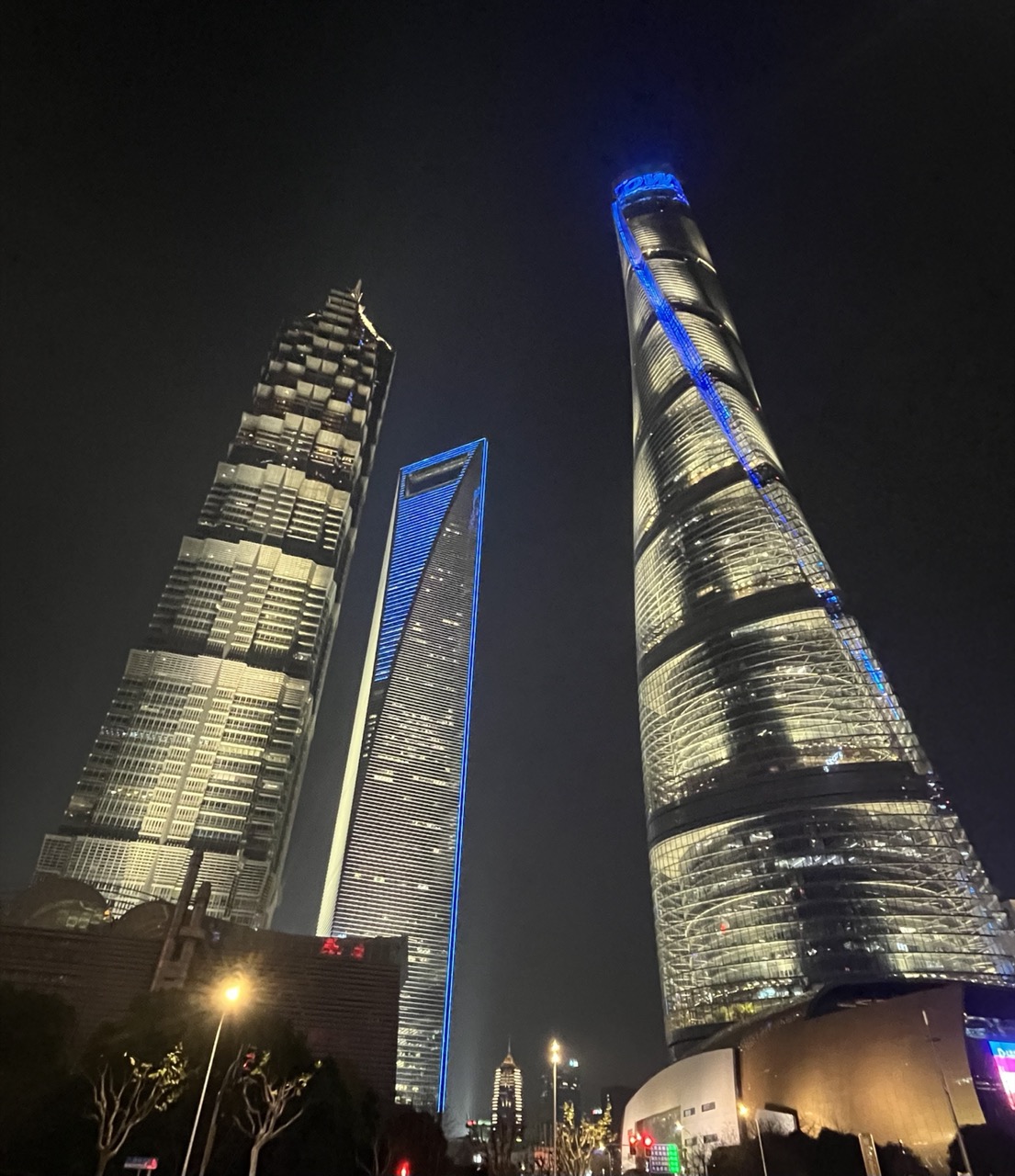
Lujiazui is the financial district that grew out of Pudong farmland after 1990. It now contains three supertall towers (Jin Mao Tower, Shanghai World Financial Center, and Shanghai Tower) plus the retro-futurist Oriental Pearl TV Tower. It is not a neighborhood for wandering so much as a set of specific stops connected by elevated walkways.
What to see
-
Shanghai Tower (上海中心大厦)
China’s tallest building at 632 m. The 118th-floor observatory is the highest public viewing deck in the city, and the elevator ride itself, reaching up to 18 m/s, is part of the attraction. Clear days matter more than time of day, though sunset slots sell out first. -
Shanghai Museum East (上海博物馆东馆)
The museum’s flagship branch on Century Avenue, opened in 2024, with one of the world’s great collections of Chinese bronzes, ceramics, and calligraphy. Use Shanghai Science and Technology Museum station (上海科技馆站) on Metro Line 2. Despite being grouped here under Pudong, it is not within the walkable Lujiazui cluster: the station is three stops from Lujiazui. Entry: Free; individual visitors no longer need an advance reservation, though a few special galleries still require booking through the Shanghai Museum's WeChat account 上海博物馆. It is closed Tuesdays except public holidays.The underground AP Plaza “fake market” is attached to the same metro station. Its counterfeit bags, watches, clothes, and souvenirs are aimed almost entirely at foreign tourists, especially Western visitors; local residents rarely shop there. Expect aggressive sales pitches and heavily inflated opening prices rather than an authentic local market.
-
Binjiang riverside promenade (滨江大道)
The Pudong-side river walk looks back at the Bund. This reverse of the classic view is best in late afternoon light. -
Jin Mao Tower (金茂大厦) / SWFC (环球金融中心)
Both have their own observatories at lower prices than Shanghai Tower; the SWFC’s “bottle-opener” skywalk has glass floors. Pick one tower, not three.
Caution
Observatories lose their point entirely in haze and low cloud, which is common. Check visibility before buying tickets by looking up from the street, and note that most tickets are date-bound.
4. Former French Concession
Getting there: Metro Line 10 or 11 to Jiaotong University (交通大学), or Line 1/7 to Changshu Road (常熟路)
Admission: Free; this is a neighborhood, not a scenic area
Time needed: Half a day at walking pace
The Former French Concession is the Shanghai that photographs quietly: low-rise 1920s-40s apartment blocks and villas under an unbroken canopy of plane trees, now interleaved with coffee shops, small restaurants, and boutiques. There is no ticket gate and no checklist. The point is the walk itself.
What to see
- Wukang Building (武康大楼)
The flatiron-shaped 1924 apartment block by architect László Hudec, at the meeting point of five streets. It has become the single most photographed building in Puxi; the crowd of photographers on the opposite corner is now part of the scene. - Wukang Road (武康路) and around
The classic walking spine. Continue into Anfu Road (安福路) for cafes, Fuxing West Road (复兴西路) for villas, and Wuyuan Road (五原路) for a quieter version of the same. - Julu-Fumin-Changle loop (巨富长: 巨鹿路 / 富民路 / 长乐路)
A better area for slow browsing than checklist sightseeing: coffee shops, dessert counters, vintage stores, small designer boutiques, and local streetwear labels sit among old lane houses and plane trees. Come without a fixed route and wander by appetite.
Caution
Weekend afternoons around the Wukang Building are shoulder-to-shoulder. If you want the streets more or less to yourself, come on a weekday morning. The light through the plane trees is better then anyway.
5. Xintiandi & Tianzifang (新天地/田子坊)
Getting there: For Xintiandi, take Metro Line 1 or 10 to South Huangpi Road (黄陂南路). For Tianzifang, take Metro Line 9 to Dapuqiao (打浦桥), about a 10-15 minute walk south.
Admission: Free; both are open commercial lane districts, not ticketed sites
Time needed: Half a day to cover both
Xintiandi and Tianzifang are Shanghai’s two opposite answers to the question of what to do with a neighborhood of shikumen (石库门) lane houses once the families who lived in them move out. They sit about 1.5 km apart, an easy walk or one metro stop, which makes them a natural pair for the same afternoon.
What to see
- Xintiandi (新天地)
Renovated shikumen lane houses have become an upscale dining and shopping quarter. It is a full rebuild rather than a restoration, polished rather than authentic, but the shikumen museum inside explains the housing style half of Shanghai once lived in. Tucked into a lane just off the main plaza is the Former Site of the Provisional Government of the Republic of Korea (大韩民国临时政府旧址): the modest three-story shikumen building where Korean independence leaders based their government-in-exile from 1926-1932 after fleeing Japanese colonial rule, now a small museum and a genuine pilgrimage site for Korean visitors. Admission CNY20 (CNY10 for seniors 60+). - Tianzifang (田子坊)
A denser, scruffier maze of lanes than Xintiandi, with original shikumen houses rather than a rebuild. It is packed with craft studios, small galleries, and snack stalls in a layout that still confuses first-time visitors. It has become heavily touristy on the main lanes; duck into the narrower side alleys for calmer corners, or go early to beat the crowds.
Caution
Both districts fill up fast on weekends and evenings. Xintiandi draws a bar crowd, while Tianzifang fills with tour groups moving through the main lanes in one direction. A weekday morning gets you both at their best.
6. People’s Square / Nanjing Road / Jing’an Temple (人民广场/南京路/静安寺)
Getting there: Metro Line 1, 2, or 8 to People’s Square (人民广场), the busiest interchange in the network
Admission: The square, park, and pedestrian street are free
Time needed: 1-2 hours, more if a museum catches you
People’s Square is Shanghai’s civic center, containing city hall, the main museums, and a park built over what was the colonial racecourse. It also marks a clear dividing line in the shopping along Nanjing Road. East of it runs the East Nanjing Road pedestrian street (南京东路步行街), a kilometer of affordable, mass-market department stores, chain shops, and neon that funnels straight to the Bund. It is the natural starting point for a first walk across the city center. West of the square, the street becomes West Nanjing Road, and the shopping shifts decisively upmarket into the luxury corridor described below.
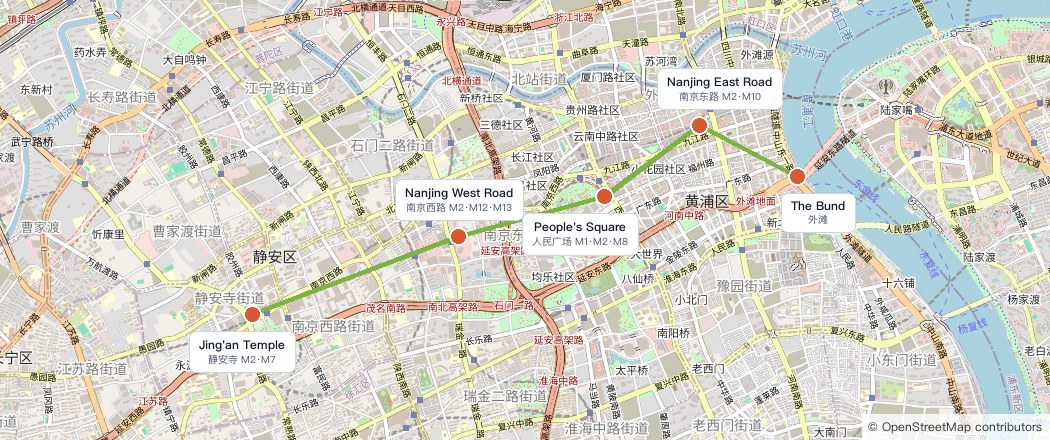
The full Jing'an Temple-to-the-Bund corridor, almost entirely walkable along Metro Line 2.
What to see
- People’s Park marriage market (人民公园相亲角)
On weekend afternoons, parents post handwritten CVs of their unmarried children under the trees. Look respectfully; it is a genuine local institution, not a performance. - Shanghai Urban Planning Exhibition Center (上海城市规划展示馆)
Worth an hour for the giant scale model of the entire city. It helps make sense of everything else you will see. - Shanghai Museum, People’s Square branch (上海博物馆人民广场馆)
The original 1996 building. Since the East branch opened in Pudong, the main collection shows there, and the People’s Square building now runs a rotating program of ticketed special exhibitions instead. The current headline show is "Crown of the World Tree: Ancient American Civilizations" (世界树之巅:美洲古文明大展), running July 9, 2026 to November 14, 2027, CNY148 (CNY74 concession). - East Nanjing Road (南京东路)
Walk it once, at night, for the neon; the shopping itself is mostly chains. - Nanjing West Road (南京西路)
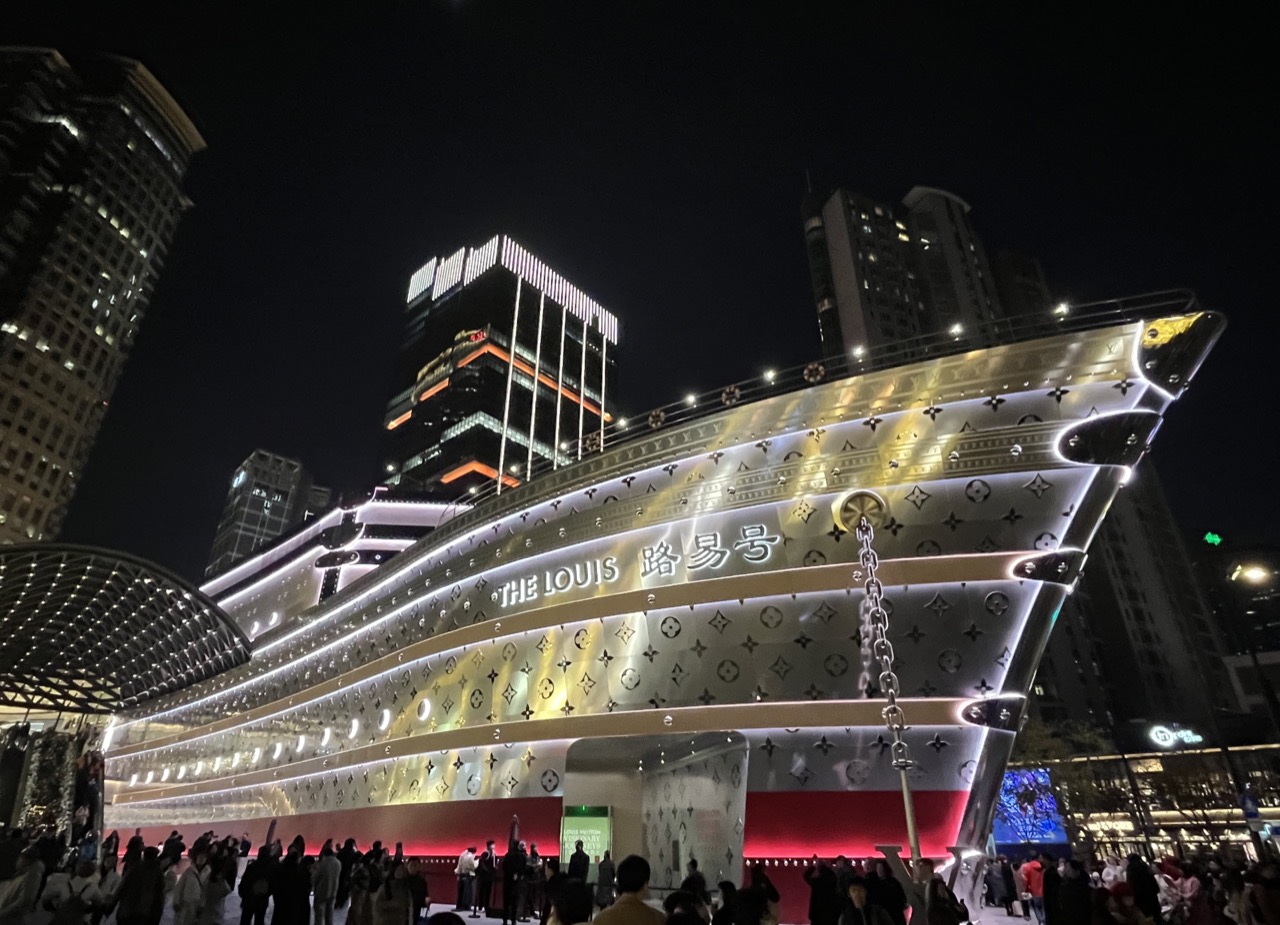
West of People’s Square, Nanjing Road switches from pedestrian street to upscale shopping strip. The first landmark is HKRI Taikoo Hui (兴业太古汇), where Louis Vuitton’s ship-shaped flagship “Louis The Ship” (路易号) opened alongside the mainland’s largest Starbucks Reserve Roastery (星巴克臻选上海烘焙工坊). The 114.5-meter metal hull is built into the plaza and contains an exhibition and restaurant. The soaring multi-floor Starbucks walks visitors through roasting and brewing and includes a rooftop bar. Both are free to browse; the LV ship needs a reservation through its “My LV” WeChat mini-program to enter the exhibition or restaurant (the link only opens from inside WeChat). Right beside it, Zhangyuan (张园) is a restored shikumen lane compound now filled with boutiques, cafes, and small exhibitions. It is an easy add-on while you are already at Taikoo Hui. Continue further west and Nanjing West Road runs through the city’s luxury-mall row, including Plaza 66 (恒隆广场) and CITIC Square (中信泰富广场), before opening onto Jing’an Temple (静安寺). - Shanghai Natural History Museum (上海自然博物馆)
A block north of the West Nanjing Rd metro station, inside Jing’an Sculpture Park, this nautilus-shell-shaped museum is worth the detour if you have kids in tow or just like a good natural-history collection. Its spiral roof is planted with greenery, and the collection holds some 290,000 specimens. Admission CNY30 (CNY12 students, CNY25 seniors and active military); open 9:00-17:00, last entry 16:00, closed Tuesdays. Tickets can be booked through the Shanghai Natural History Museum (上海自然博物馆) WeChat account, or through Trip.com. - Jing’an Temple (静安寺)
A working Buddhist temple with a history going back over 1,700 years, rebuilt in its current gold-roofed, Song dynasty (960-1279) style form in the 2000s. It is one of the more surreal sights in Shanghai: a glittering temple complex standing directly across from a Line 2/7 metro entrance and a ring of glass shopping towers. Admission CNY50 (dynamic pricing during Chinese New Year, when it can run much higher); open 07:30-17:00. Worth ten minutes even if temples aren’t usually your thing, precisely for the contrast with everything around it.
Caution
The same tea-ceremony scam described in the Bund section works this street constantly. Assume any stranger who opens with polished English and an invitation is working.
7. Longhua Temple (龙华寺)
Getting there: Metro Line 11 or 12 to Longhua (龙华), then a short walk
Admission: Free. Jing’an Temple charges CNY50 (dynamic pricing during Chinese New Year, when it can run much higher)
Time needed: About 1-1.5 hours, including a bowl of noodles
Longhua is a more neighborhood-rooted alternative to Jing’an Temple. Entry is free, worship remains central to the visit, and many younger people come to pray for work and greater stability. That recent wave of young worshippers is the subject of a Wall Street Journal report on Longhua Temple.
The temple’s inexpensive vegetarian noodles are served on an honor system. Diners eat first and pay what they can afterward. The principle is deliberately generous: someone in genuine difficulty can still have a meal, while visitors with more room in their budget sometimes pay extra to cover bowls for others. It feels less like a promotional gimmick than a small piece of the temple’s everyday social role.
What to see
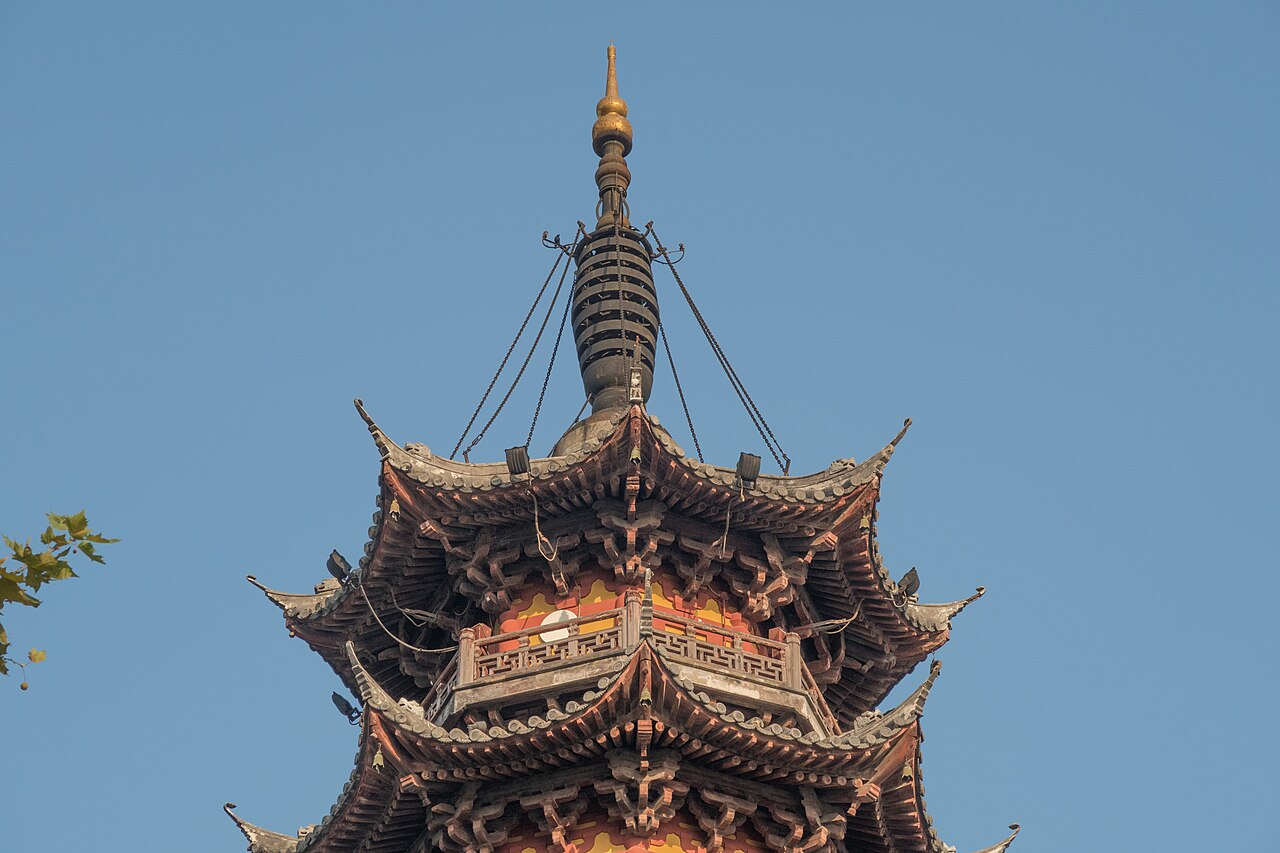
- Longhua Pagoda (龙华塔): The seven-story pagoda stands outside the temple gate. Its present brick structure was rebuilt in 977 during the Northern Song dynasty (960-1127), although later repairs have replaced parts of its exterior. It is viewed from outside and is not open for climbing.
- The worship halls: Watch the active devotional life rather than treating the complex only as historic architecture. Keep voices low and leave space for people who have come to pray.
- Longhua vegetarian noodles (龙华素面): Have a simple bowl at the temple’s vegetarian dining hall and pay through the posted method after eating. If you can comfortably contribute more, the honor system allows that generosity to support the next diner.
Caution
The pagoda is separate from the temple’s visitor route and cannot be entered. The complex is busiest around major Buddhist observances, when the atmosphere is rewarding but the halls and noodle dining area can become crowded.
8. Zhujiajiao Water Town (朱家角)
Getting there: Metro Line 17 from Hongqiao Railway Station to Zhujiajiao station, then a 15-20 minute walk or short bus hop; about 1-1.5 hours total from central Shanghai
Admission: The town itself is free; some small museums and gardens charge separately
Time needed: Half a day; combine with a relaxed lunch
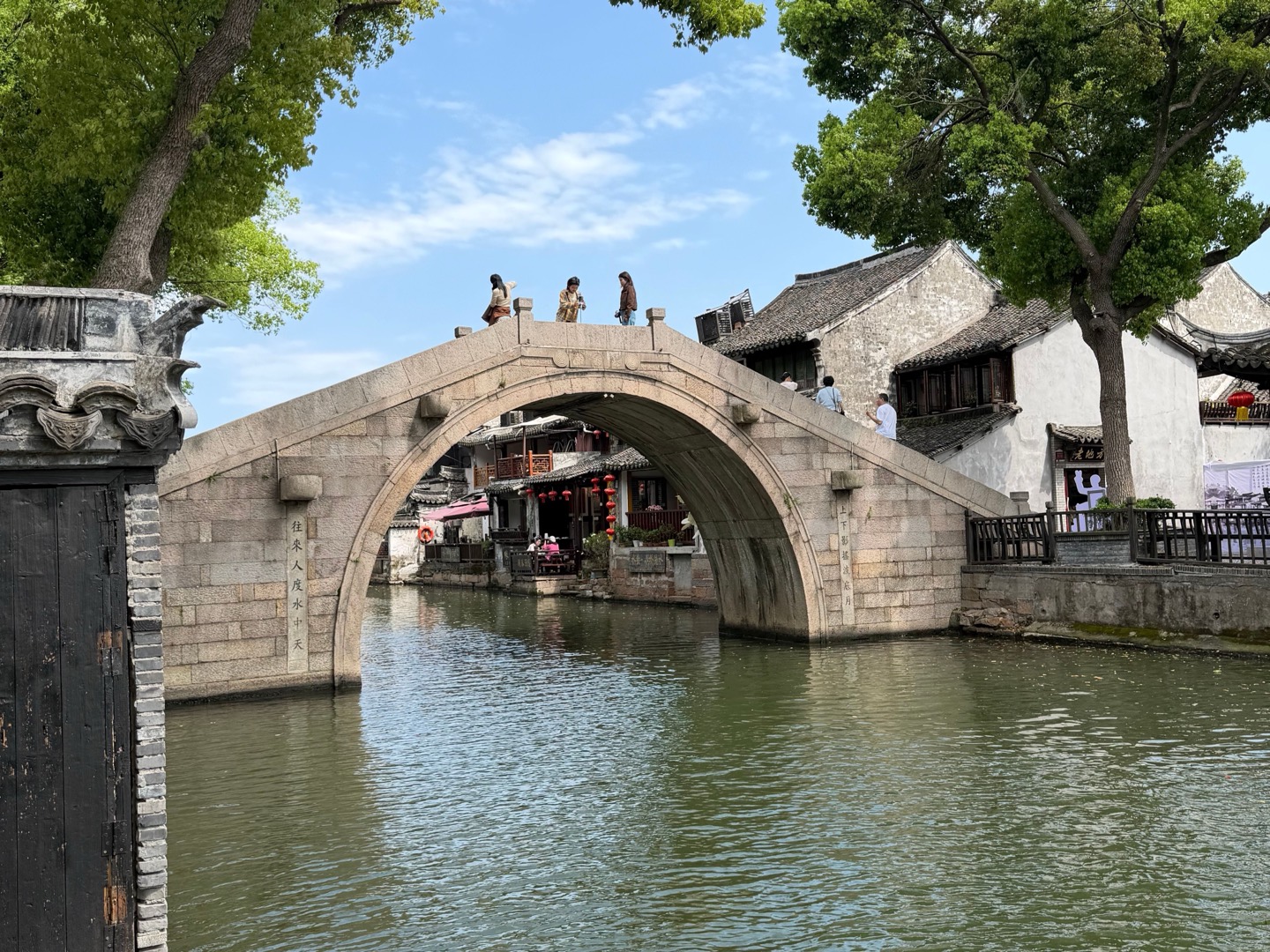
Zhujiajiao is a 1,700-year-old canal town at the western edge of Shanghai’s municipality, with stone bridges, black-tile houses leaning over the water, and boatmen poling tourists along the main channel. It is not as famous as water towns like Zhouzhuang or Wuzhen, which is precisely its advantage: you can reach it by metro, and on a weekday it stays reasonably calm.
What to see
- Fangsheng Bridge (放生桥)
The five-arch Ming dynasty (1368-1644) bridge over the main canal, and the town’s postcard view. - North Street (北大街)
The main old lane, lined with snack stalls, rice-wine shops, and tea houses in stilted buildings over the water. - A boat ride
Traditional boats run fixed routes through the canals at CNY200-300 per boat (up to 6 people). They are worth it as a group but expensive solo. - Kezhi Garden (课植园)
A quieter early-20th-century garden estate at the north end of town, usually a few yuan to enter.
Panlong Tiandi (蟠龙天地): a substitute worth knowing about
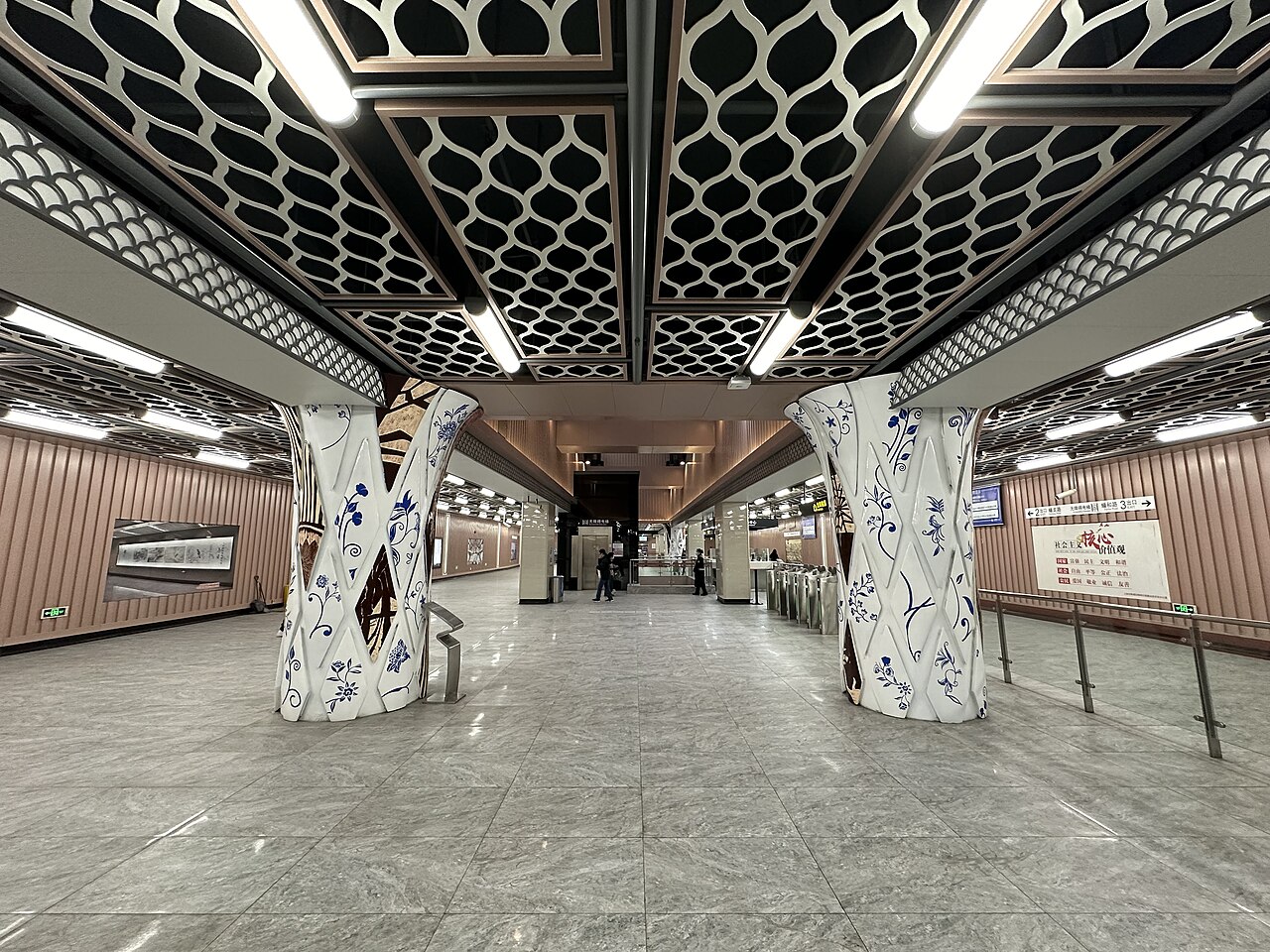
A newer option, and a genuine substitute for Zhujiajiao if you’re short on time or want a more polished experience. Shui On, the developer behind Xintiandi, opened it in 2023 on the site of a canal village with roots back to the Sui dynasty (581-618). The project restored the old “十”-shaped street grid, a historic ancestral hall, and several heritage bridges and wooden buildings, then wove contemporary shops, restaurants, and cafes through them. It is less atmospheric than Zhujiajiao’s real patina, but also less crowded and more comfortable. It sits on the same Metro Line 17, one stop closer to the city at Panlong Road station, so it is easy to substitute or add as a second stop if you have a full day.
Caution
On weekends and holidays the main lanes jam solid by late morning. Go on a weekday, arrive before 10:00, or stay into the early evening after the day-trip crowds thin out.
9. Shanghai Disneyland (上海迪士尼)
Getting there: Metro Line 11 to Disney Resort (迪士尼) station, 45-70 minutes from the city center
Tickets: dynamic pricing, roughly CNY475-799 for a one-day ticket. Buy through the official Shanghai Disney Resort site, the official app, WeChat mini-program, or authorized platforms only
Time needed: A full day, gates to fireworks
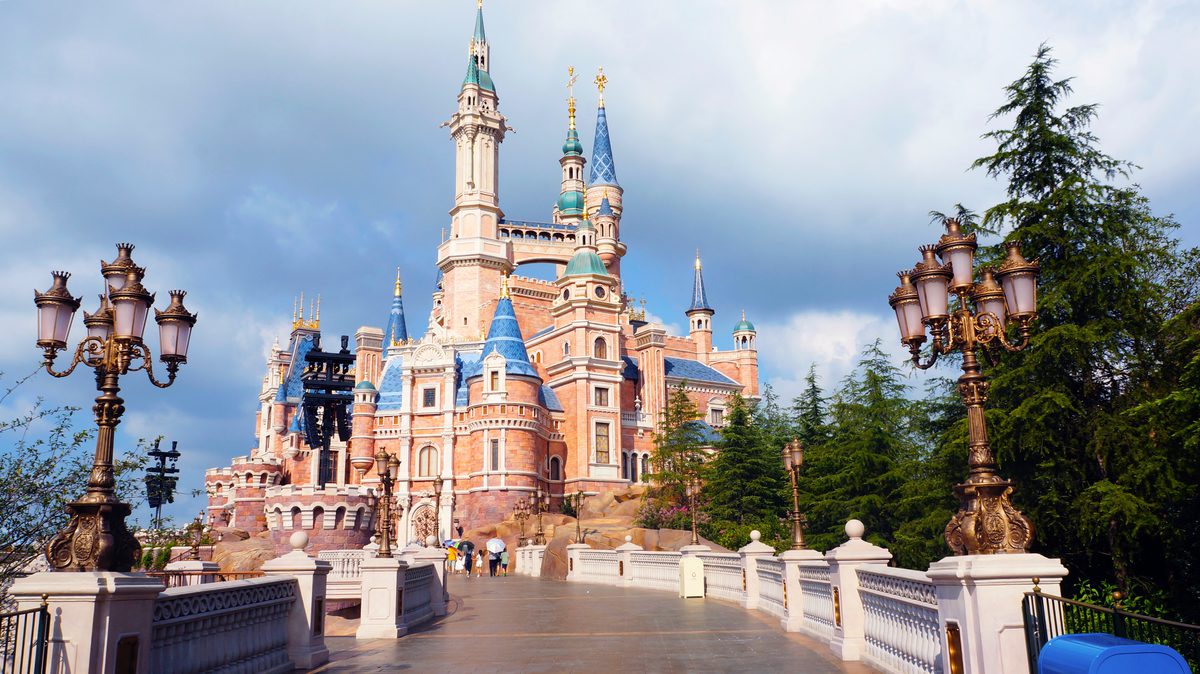
Shanghai Disneyland is the largest Disney castle park in Asia and the only one with a Zootopia land. It follows the global Disney playbook, with dynamic ticket pricing by date, a paid queue-skipping system (Disney Premier Access), and an official app that is genuinely essential for managing ride wait times.
Practical notes
- Prices follow a tiered calendar: quiet weekdays sit at the bottom of the range, weekends and Chinese public holidays at the top. If your dates are flexible, a Tuesday-Thursday visit saves both money and queue time.
- Download the official Shanghai Disney Resort app before you go; it handles park entry codes, ride waits, and food ordering, and works in English.
- Security checks bags at the gate, and outside-food rules are stricter than at US parks.
- The TRON coaster and the Pirates of the Caribbean dark ride are the two attractions unique enough to anchor the day around.
Caution
Avoid Chinese public holidays entirely. Golden Week crowds turn headline rides into 2-3 hour queues. Third-party “discount tickets” from unofficial resellers are a recurring source of entry problems; stick to official channels.
Suggested Itineraries
2 Days in Shanghai
Day 1: The classic core
Jing’an Temple, People’s Square area in the morning, walk East Nanjing Road to the Bund for lunch nearby, cross to Lujiazui by ferry for the Shanghai Tower in the afternoon, and be back on the Bund promenade for the evening lights.
Day 2: Gardens and plane trees
Yu Garden and the Old City at opening time, then Xintiandi and Tianzifang for a quick stroll, the Former French Concession for the afternoon, coffee on Anfu Road, and dinner in the neighborhood.
3 Days in Shanghai
Days 1-2 as above, then:
Day 3: Museums or water town
Either the Shanghai Museum East plus the Pudong riverside, Longhua Temple followed by time in the Former French Concession, or a half-day trip to Zhujiajiao with a slow lunch. Families may swap this day for Disneyland.
4-5 Days: Shanghai as a base
Add day trips by high-speed rail. Suzhou’s gardens are 23-40 minutes away by train, while Hangzhou’s West Lake is about an hour away. Both are easy day trips, allowing you to return to Shanghai for the evening. This connectivity makes Shanghai an excellent base for a week-long trip.
Where to Stay
Where you stay changes the trip less than in most Chinese cities because the metro connects everything, but it still sets the mood. The Bund side of the river puts the classic views at your door; the Former French Concession trades convenience for atmosphere; Lujiazui gives skyline rooms and mall-heavy evenings. Prices below are rough high-season guides; check current rates before booking.
Luxury
Every major international luxury hotel brand has a presence in Shanghai, so the choice usually comes down to neighborhood rather than availability.
- Heritage on the Bund
The prime stretch of the Bund itself is lined north to south with The Peninsula Shanghai (上海半岛酒店), the Fairmont Peace Hotel (和平饭店), Waldorf Astoria Shanghai on the Bund (上海外滩华尔道夫酒店) in the former Shanghai Club building, and, just past Yan’an Road, The St. Regis Shanghai on the Bund (上海外滩瑞吉酒店). All four sell some version of the same 1920s treaty-port fantasy, in either the original building or a careful recreation of one. On the Pudong side, the focus is height and skyline rather than history. The Grand Hyatt in Jin Mao Tower, the Park Hyatt higher up in the Shanghai World Financial Center, and the J Hotel near the very top of Shanghai Tower all compete on views from the 50th floor and up. Closer to the water, the Ritz-Carlton Shanghai Pudong sits inside the IFC mall complex, and the Pudong Shangri-La takes the prime riverside spot directly across from the Bund. Often CNY1,500-4,000+/night.
Premium
- Boutique properties in the Former French Concession
Small hotels and converted villas put you on the plane-tree streets, with cafes instead of lobbies downstairs. Often CNY900-1,800/night. Best for second visits or travelers who prioritize neighborhoods over sights.
Midscale
- Domestic design chains (Atour 亚朵, Ji Hotel 全季, and similar)
Reliable, clean, and often better located than international midscale brands. Look for properties within a few blocks of a Line 1/2/10 station. Often CNY400-800/night.
Budget
- Hostels and budget chains around People’s Square and the Old City
The best-value bases for walkers: most of the inner ring is reachable on foot. Often CNY250-450/night, and private rooms in hostels cost little more than a pair of dorm beds.
Where to Eat
Restaurants by Cuisine
Shanghainese / Benbang Cuisine (上海菜 / 本帮菜)
- Yang’s Fried Dumplings (小杨生煎): A low-cost casual chain with hundreds of branches, best known for freshly pan-fried shengjian: crisp-bottomed buns filled with pork and hot broth. It is convenient rather than atmospheric and works well for a quick breakfast or snack.
- Ren He Guan (人和馆): A Michelin one-star Shanghainese restaurant with nostalgic old-Shanghai decor. Its signature is crab roe spooned over rice; come here for polished versions of classic local dishes, and reserve ahead when possible.
- Lao Xing Xian (老兴鲜): A Michelin-recommended benbang restaurant known for seafood and river dishes. Its white-braised eel has a clean, peppery flavor and crisp texture, offering a lighter contrast to the dark, sweet soy braises often associated with Shanghai cooking.
- Lai Lai Xiaolong (莱莱小笼): A small Michelin Bib Gourmand dumpling specialist near Nanjing Road, especially known for crab roe xiaolongbao served with ginger vinegar. Expect queues in crab season, and mix in other fillings if the pure crab version feels too rich.
Areas for Food
- The Old City / Yu Garden bazaar: Snack theatre with xiaolongbao queues, sticky rice, and candied hawthorn. Fun once, overpriced twice.
- Former French Concession: The city’s densest concentration of good small restaurants, cafes, and bistros, both Chinese and Western.
- Yunnan South Road (云南南路): An old-school food street near People’s Square for benbang (本帮, local Shanghainese) standbys without tourist pricing.
- Malls everywhere: As across urban China, upper-floor mall food courts are where locals actually eat well and cheaply. They are never a bad fallback.
Dishes to Try
- Xiaolongbao (小笼包): Shanghai’s soup dumplings have thin skins holding hot broth and pork. Bite a corner, drink the soup, then eat. Nanxiang (南翔馒头店) is the famous name; locals often prefer Jia Jia Tang Bao (佳家汤包) near People’s Square for thinner skins and shorter queues.
- Shengjian (生煎包): The pan-fried cousin has a crispy bottom, a soupy filling, and sesame and scallion on top. Yang’s Fried Dumplings (小杨生煎) is the accessible chain version; eat them fresh off the pan and mind the first squirt of soup.
- Scallion oil noodles (葱油拌面): Deceptively plain noodles tossed in soy and slow-fried scallion oil. A benchmark dish for any benbang restaurant, and good bowls cost pocket change.
- Hongshao rou (红烧肉): Shanghai-style red-braised pork belly, sweeter and glossier than versions elsewhere in China. Order it with rice and greens to cut the richness.
- Pork chop with rice cakes (排骨年糕): A retro street pairing of fried breaded chop over chewy rice cakes in sweet-savory sauce. Old-school shops around Yunnan South Road still do it properly.
- Crab shell pastry (蟹壳黄): A flaky, sesame-crusted baked bun filled with scallion or sweet bean paste. It contains no crab; it simply looks like one. Best from hole-in-the-wall bakeries in the morning.
- Hairy crab (大闸蟹): The autumn ritual, available roughly from October to December, is a whole steamed crab eaten slowly with vinegar and ginger tea. Seasonal and laborious; do it once at a reputable restaurant rather than from a street tank.
- Wontons (馄饨): Big vegetable-and-pork wontons in clear broth for breakfast or a light dinner. This everyday comfort food never makes highlight lists but should.
Hero photo: King of Hearts, CC BY-SA 4.0, via Wikimedia Commons.
Help keep this guide accurate
Found something incorrect, outdated, or missing? Tell us what changed and include a source when possible.
Suggest an update