
On this page14 sections
✓ Prices and practical details last verified July 29, 2026
Chongqing is the great vertical city of the Yangtze, a place built on steep hills where the Jialing River meets the Yangtze and roads, railways, and stilt houses stack on top of one another. Foreign visitors know it partly as a viral “8D magic city,” where a light-rail train slices through an apartment block and streets run at six different levels, and partly as the birthplace of the fiery, numbing hotpot that has spread across China. It is also the western gateway to the Three Gorges and a base for two very different day trips: the ancient Buddhist carvings at Dazu and the karst canyons at Wulong. Come hungry and ready to climb.
Highlights
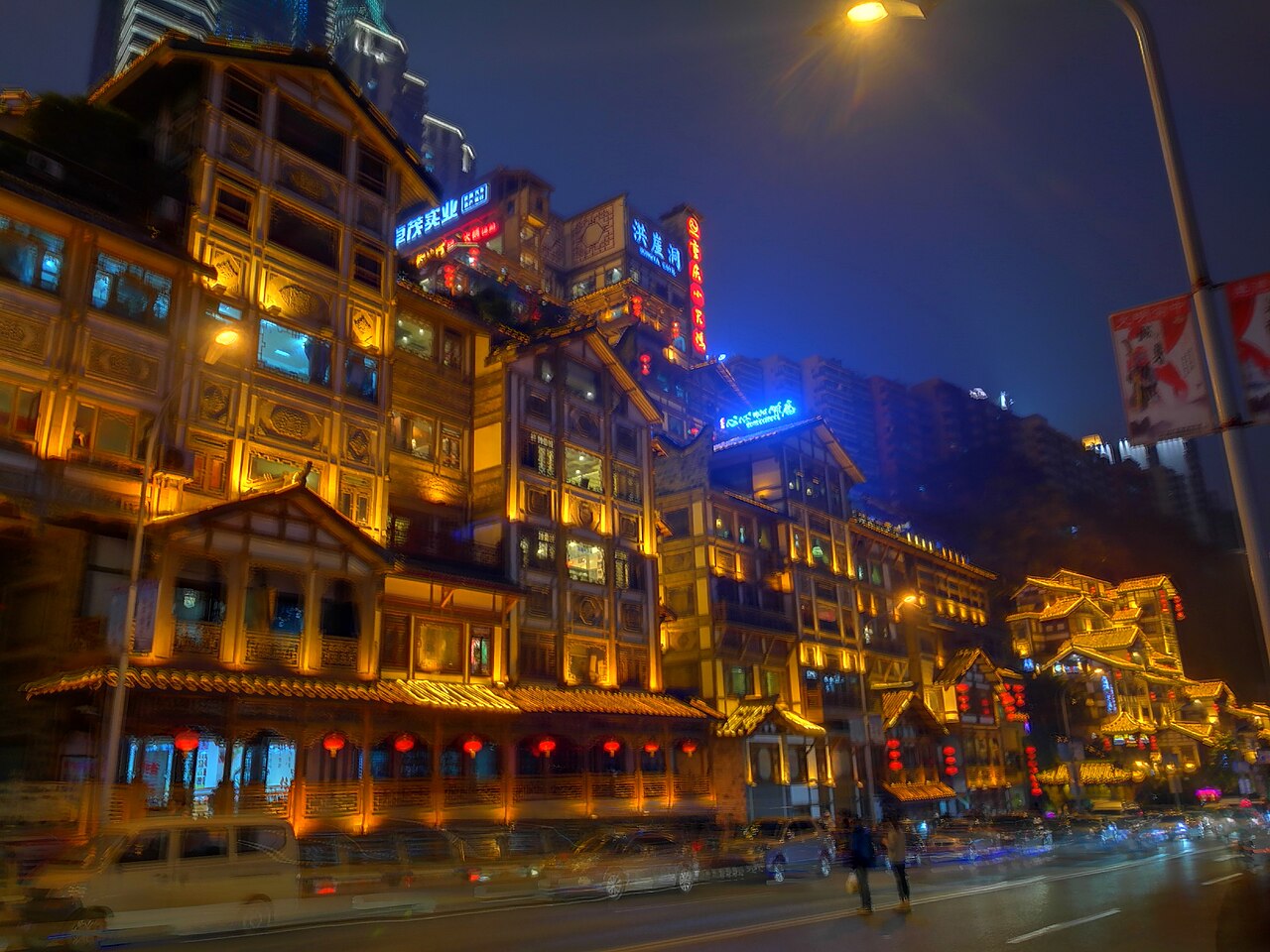
- Watch the golden stilt-house facade of Hongyadong (洪崖洞) light up over the river after dark.
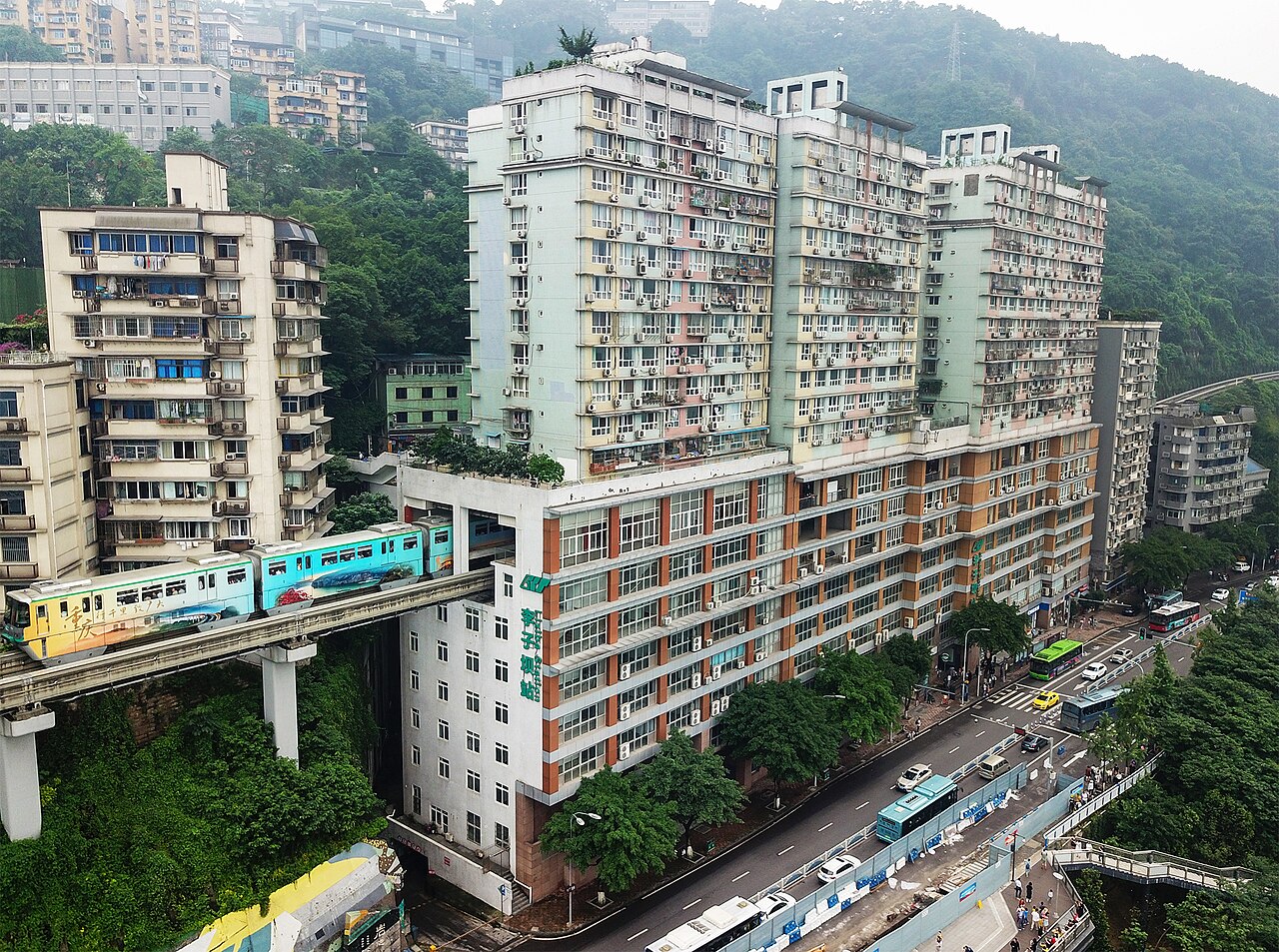
- Ride the Yangtze River Cableway (长江索道) across the water and catch a light-rail train passing through a building at Liziba (李子坝).
- Wander the old lanes of Ciqikou (磁器口), a preserved riverside town inside the modern city.
- Look back at the whole skyline from the Nanshan (南山) hills, the classic night-view vantage.
- Take a day trip to the UNESCO-listed Dazu Rock Carvings (大足石刻) or the karst bridges of Wulong (武隆).
Transportation
Getting there
Chongqing Jiangbei International Airport (重庆江北国际机场 / CKG) is one of western China’s busiest, north of the center. Check current direct routes on FlightConnections. Metro Line 10 and Line 3 run to Jiangbei International Airport (T2 and T3); the ride from the centre takes roughly 30–45 minutes and costs CNY2–7 depending on distance. Chongqing is also a major high-speed rail hub, with fast links west to Chengdu and connections in every direction.
Railway stations
Chongqingbei (重庆北站) and Chongqingxi (重庆西站) handle most high-speed trains, with a newer Chongqingdong (重庆东站) adding capacity. The stations are large and far apart, so always check which one your ticket uses and allow extra time to reach it; the metro connects all of them.

High-speed rail times from Chongqing to Chengdu, Xi'an, Yichang, Guiyang, and Zhangjiajie. Most fast trains leave from Chongqingbei or Chongqingxi.
Common onward routes
| Route | Best option | Travel Time | Notes |
|---|---|---|---|
| Chongqing (重庆) -> Chengdu (成都) | High-speed train | 1-1.5 hours | Very frequent; the two Sichuan-basin giants are close neighbors. The fastest non-stop G trains from 重庆西 do it in about 1h06min. |
| Chongqing (重庆) -> Guiyang (贵阳) | High-speed train | ~2 hours | South into Guizhou’s mountains and villages; the fastest trains take 1h58min. |
| Chongqing (重庆) -> Yichang (宜昌) | High-speed train or cruise | 3.5-4.5 hours by rail | East toward the Three Gorges, covered in our Three Gorges guide. |
| Chongqing (重庆) -> Xi’an (西安) | High-speed train | around 5 hours | North toward the Terracotta Army; the fastest G trains (via 郑渝高铁) take about 5h04min. |
| Chongqing (重庆) -> Zhangjiajie (张家界) | High-speed train | 2 to 3.5 hours | East into Hunan’s sandstone pillar landscape via the new 渝厦高铁, covered in our Zhangjiajie guide. Wulong makes a convenient stopover on this route. |
| Chongqing (重庆) -> Beijing (北京) | Flight | about 7 hours by rail | Flying is usually the better choice for this distance. |
Getting around
The metro is the key to Chongqing, and half the fun is the ride itself, with lines that cross rivers on high bridges, burrow through hills, and famously pass straight through a residential tower at Liziba. Fares are paid with a transport QR code in Alipay or WeChat. All 212 stations accept Visa, Mastercard, JCB, American Express, and UnionPay at manual ticket windows for purchasing single-journey, one-day, or three-day tickets. Note that the ticket gates do not accept contactless foreign-card tap — you must buy a physical ticket at the window first Because the city is so vertical, walking distances are deceptive: two points close on the map can be separated by a cliff, a staircase, or several floors, so lean on the metro and taxis and do not trust flat-map estimates.
Key Attractions
Chongqing’s sights split into a central Yuzhong cluster and several separate trips. Hongyadong, Jiefangbei, and the Yangtze cableway fit naturally into one downtown route. Liziba lies farther west on Line 2 and should be treated as a separate metro stop, not part of the same walking area. Ciqikou and Nanshan sit farther out, while the Dazu carvings and Wulong karst each require a full day. The numbers on the map match the sections below; click a numbered dot to jump to it.

1. Hongyadong (洪崖洞)
Getting there: Metro Line 1 or 6 to Xiaoshizi (小什字), then a short walk
Admission: free to enter but requires a reservation during peak hours via the '洪崖洞' WeChat mini-program. Lighting is on 19:00–23:00 year-round, typically starting at 19:30 in summer (later sunset) and 18:00 during major holidays. The busiest and best time is after dark; the facade lights switch off at 23:00
Time needed: 1 to 2 hours, best in the evening
Hongyadong is the image most people carry of Chongqing: an eleven-story complex of traditional stilt houses (吊脚楼) built into the cliff above the Jialing River, glowing gold with lantern light after dark. Inside it is a warren of shops, restaurants, and viewing terraces stacked on top of one another, and because the levels connect to different streets, you can enter on the ground floor and exit eleven stories up onto a bridge. It is heavily commercialized and extremely crowded inside — the exterior night view from across the river is the real draw, and going in is entirely skippable. The best photo spots are from Qiansimen Bridge or the opposite (Jiangbei) bank.
 Click to open interactive map
Central Chongqing landmarks from Liziba and Testbed 2 to Shibati and Chaotianmen.
What to see
- The lit facade after dark
The whole stilt-house front glows gold in the evening; the best view is from the Qiansimen Bridge or the opposite bank. - The stacked interior
Eleven floors of shops and food connected by escalators and walkways, but it is aggressively commercialised and packed — fine to skip and just enjoy the facade from outside. - The rooftop and river terraces
Upper levels open onto bridges and terraces looking across the Jialing River toward Jiangbei.
Caution
Evening crowds are intense, especially on weekends and holidays, and the surrounding streets jam up. Come before dusk to beat the worst of it, watch the lights come on, then move on rather than fighting the peak crush.
2. Jiefangbei (解放碑)
Getting there: Metro Line 1 or 2 to Jiaochangkou (较场口), or Line 2 to Linjiangmen (临江门)
Admission: Free
Time needed: 1 to 2 hours
Jiefangbei, the Liberation Monument, is the heart of downtown Chongqing, a 1940s victory column now ringed by luxury malls and skyscrapers in the city’s busiest shopping district. It belongs to the central Yuzhong walking cluster with Hongyadong, the Eighteen Steps, and the Yangtze River Cableway. The monument itself is modest, but the surrounding pedestrian streets are useful for food, shopping, and a break between nearby sights.
What to see
- Jiefangbei pedestrian district (解放碑步行街)
The monument itself is small, but the surrounding streets are the city’s shopping and people-watching core. - The Eighteen Steps and old alleys (十八梯)
A restored old-town stair district nearby, giving a sense of the vertical lanes that once covered the peninsula. - Bayi Food Street (八一路好吃街)
A convenient nearby concentration of snack stalls and casual restaurants, best used as a meal stop rather than a destination in itself.
Caution
This is a very commercial shopping district, and the monument is smaller than many visitors expect. Use Jiefangbei as a central base and rest stop rather than treating it as a major standalone attraction.
3. Liziba Monorail (李子坝)
Getting there: Metro Line 2 to Liziba (李子坝)
Admission: Free
Time needed: 20 to 40 minutes
Liziba lies west of the central Jiefangbei and Hongyadong cluster and is not a walkable extension of it. Here, Line 2 passes directly through floors six to eight of a residential tower, one of Chongqing’s clearest examples of infrastructure fitting itself into the city’s steep and crowded terrain. Ride the train through the building, then use the viewing platform below for the familiar exterior photograph.
What to see
- The train through the building (李子坝轻轨穿楼)
Watch a Line 2 train enter the tower from the viewing platform below, then ride through the station yourself. - Testbed 2 (鹅岭二厂)
This converted industrial complex is much closer to Liziba than Jiefangbei and makes a more logical nearby stop for cafés, city views, and reused factory spaces. - Three Gorges Museum (三峡博物馆)
The museum is another useful stop on the western side of central Chongqing, with exhibits on the city, the reservoir region, and wartime history.
Caution
Liziba is a quick photo stop rather than a long visit. It is easy to reach by Line 2, but do not plan it as part of a walking route around Jiefangbei or Hongyadong.
4. Yangtze River Cableway & Chaotianmen (长江索道)
Getting there: Metro Line 1 or 6 to Xiaoshizi (小什字) for the cableway; Chaotianmen is a short walk or ride north
Admission: CNY30 one-way and CNY50 round-trip. Operating hours: summer (Mar–Nov) 08:00–22:00, winter (Dec–Feb) 08:00–21:00, public holidays 07:30–22:30. Tickets go on sale 15 minutes before opening each day on the '长江索道' WeChat official account, which also issues a queue number. Children under 1.3 m ride free
Time needed: 2 to 3 hours
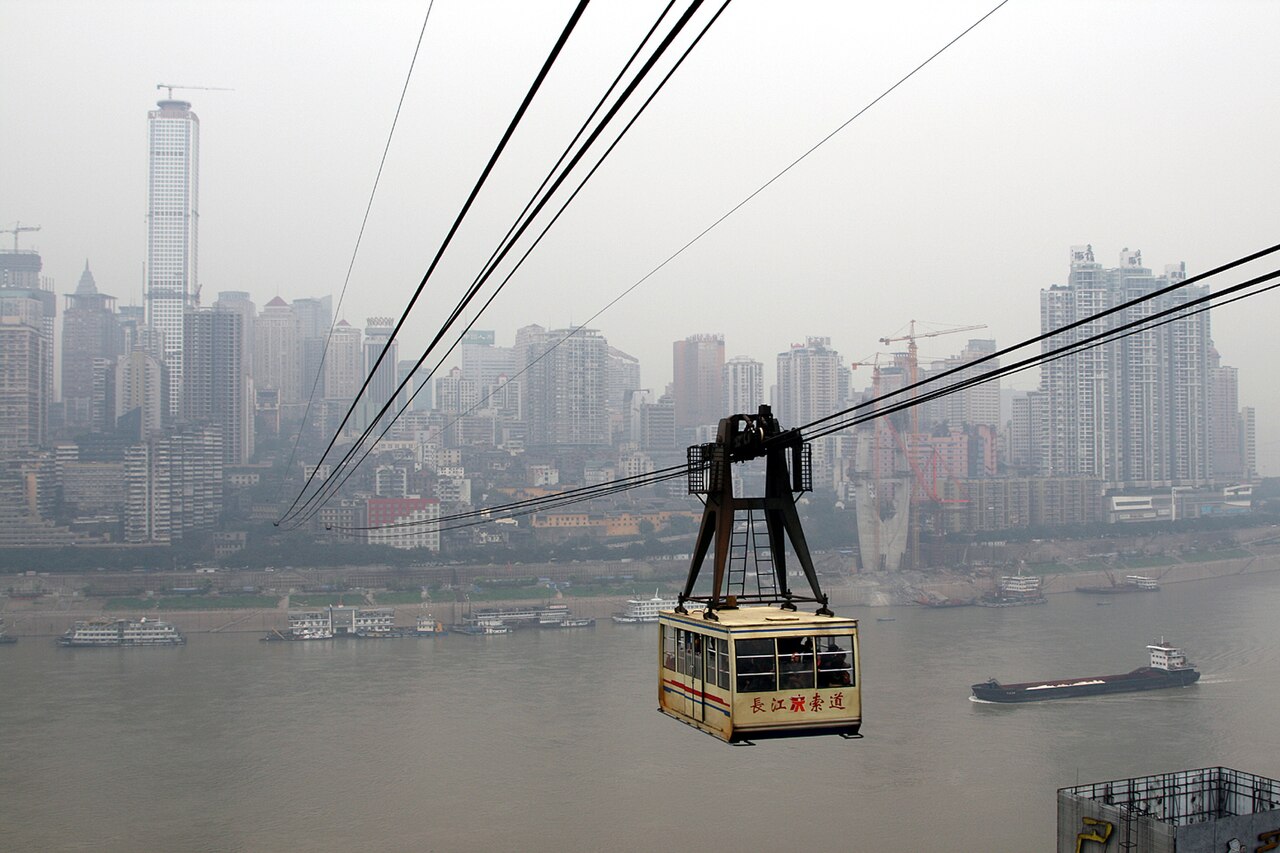
The Yangtze River Cableway is a survivor from the days before the city’s bridges, a passenger gondola that still carries people across the Yangtze from the Yuzhong peninsula to the south bank. The short ride gives a fine moving view of the skyline and the river traffic, and it has become an attraction in its own right. Nearby, Chaotianmen (朝天门) marks the tip of the peninsula where the Jialing meets the Yangtze, now crowned by the boat-shaped Raffles City towers and their sky bridge.
What to see
- The cableway crossing
A slow glide over the Yangtze with the towers on one side and the south bank on the other, best in clear weather. - Chaotianmen(朝天门) and the two rivers
The confluence where the green Jialing meets the brown Yangtze, viewable from the waterfront and the Raffles City deck. - A two-rivers boat cruise (两江游)
Evening sightseeing boats loop past the illuminated skyline, a popular way to see the city lit up from the water.
Caution
Queues for the cableway can be very long at peak times; buy a timed ticket or go early or late. The view depends on the weather, and Chongqing is often hazy, so pick a clear day for the crossing.
5. Ciqikou Ancient Town (磁器口)
Getting there: Metro Line 1 to Ciqikou (磁器口)
Admission: Free
Time needed: 2 to 3 hours
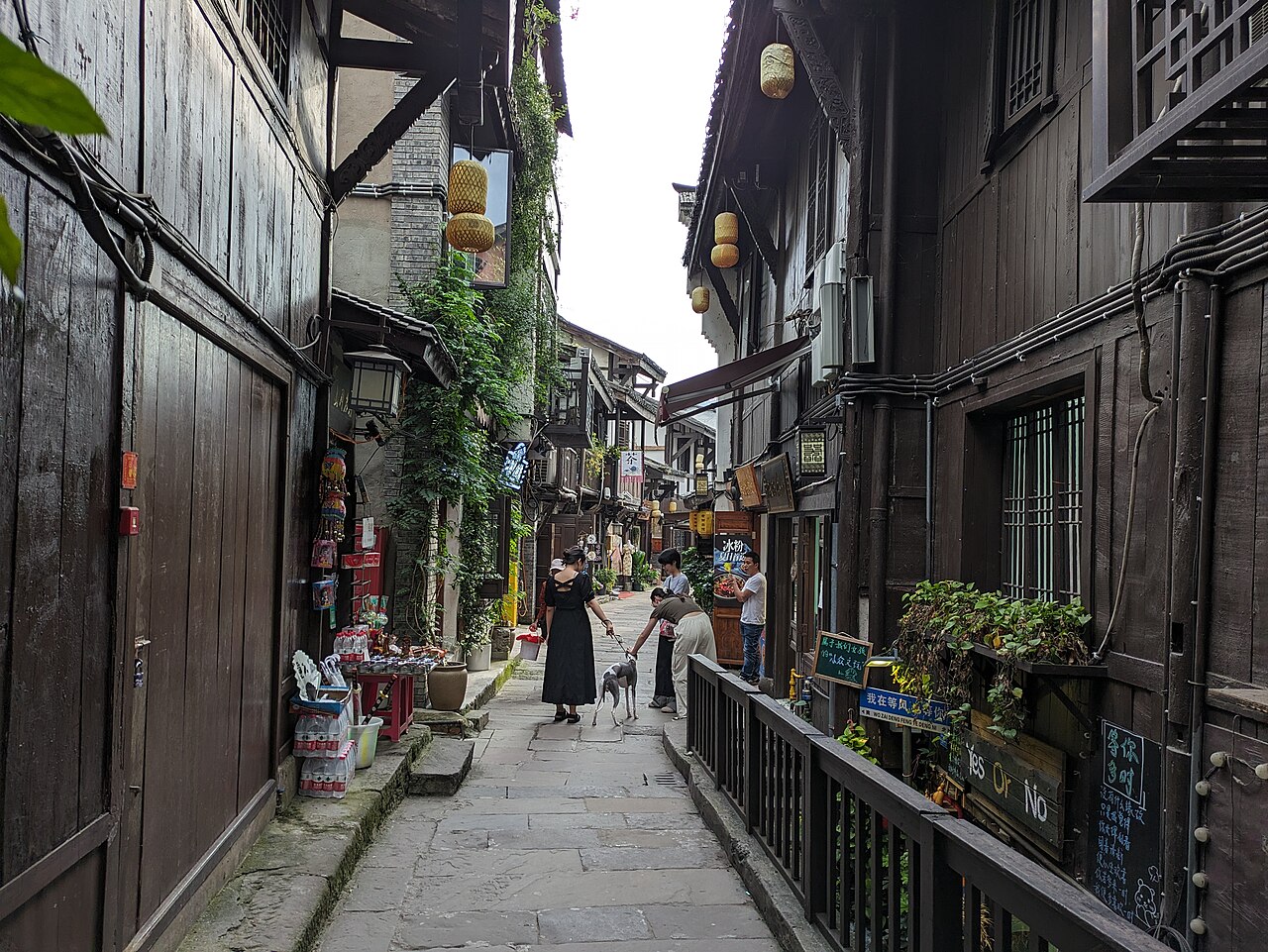
Ciqikou is a preserved old porcelain-trading town on the Jialing River, a cluster of Ming dynasty (1368-1644) and Qing dynasty (1644-1912) lanes now full of snack stalls, teahouses, and craft shops inside the modern city. It is unabashedly touristy and can be crowded, but the stone streets, riverside setting, and traditional performances give a taste of old Chongqing that the glass-tower downtown does not. It is also a good place to graze on local street food.
What to see
- The old main street
Stone-paved lanes of shops and snack stalls climbing up from the river, the core of the old town. - Teahouses and folk performances
Traditional teahouses with storytelling and Sichuan opera, a slower counterpoint to the shopping. - Riverside views
The lower town opens onto the Jialing River, quieter than the packed main lanes.
Caution
Weekends and holidays fill the narrow lanes to a crawl, and much of what is sold is generic tourist fare. Come on a weekday morning for a more relaxed wander, and treat the food, not the shopping, as the draw.
6. Nanshan & the Night View (南山)
Getting there: Taxi or Didi up to the Nanshan hills; the Yikeshu platform is the main viewpoint
Admission: A small fee for the Yikeshu viewing deck; the hills are otherwise free
Time needed: An evening
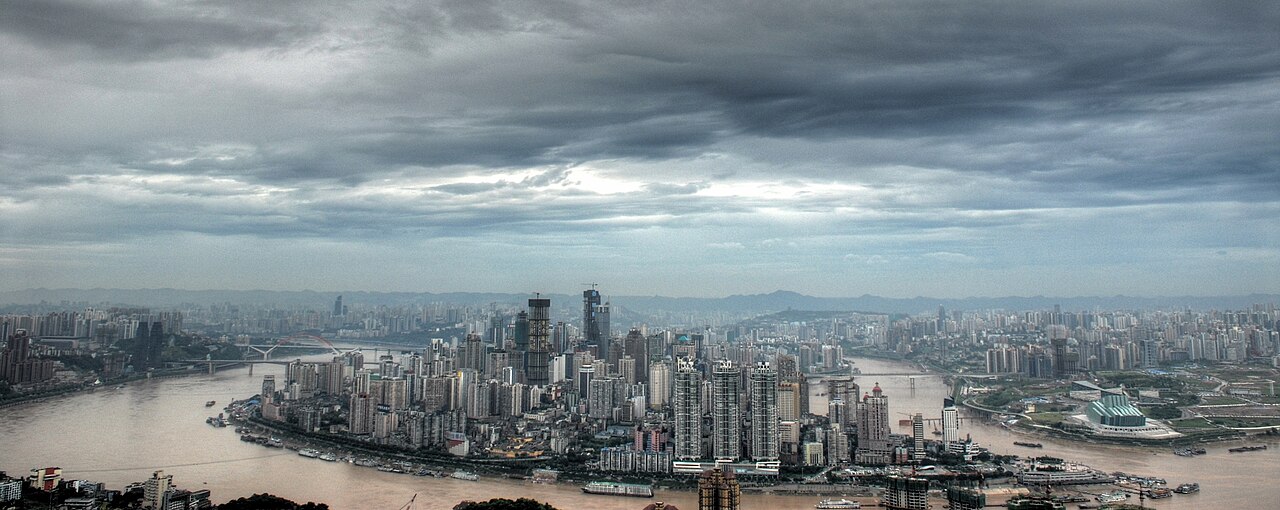
Chongqing’s night view is one of its defining experiences, and the classic place to take it in is from the Nanshan (South Mountain) hills across the Yangtze. The Yikeshu (一棵树) observation deck looks straight across at the Yuzhong peninsula, where the towers, bridges, and stacked streets light up into the layered skyline the city is famous for. The hills also hold gardens, old villas, and some of the city’s best-known hotpot restaurants.
What to see
- The Yikeshu observation deck (一棵树观景台)
The classic head-on view of the peninsula skyline at night, purpose-built for the photo. - Nanshan Botanical Garden (南山植物园)
Large hillside gardens, a green escape from the dense city below, good by day. - Hillside hotpot
Nanshan is dotted with famous open-air hotpot restaurants; dinner with a view is a local tradition.
Caution
The view is entirely about clear weather and timing; haze is common, and the best moment is the hour after the lights come on. Traffic up the hill is heavy at dusk, so allow time or go a little earlier.
7. Dazu Rock Carvings (大足石刻)
Getting there: About 1.5 to 2 hours west of the city; high-speed train to Dazu South plus a local bus, an organized day tour, or rental car
Admission: CNY115 (peak Mar–Nov) / CNY100 (off-peak Dec–Feb) for Baodingshan; CNY70 peak / CNY50 off-peak for Beishan; a combined ticket for both is CNY140 peak / CNY120 off-peak. Opening hours: 09:00–18:00 (last entry 16:30 for Baodingshan, 17:00 for Beishan). Purchase via the '大足石刻' WeChat official account or on-site. Children under 1.2 m, seniors 65+, and active military enter free. Buy tickets on Trip.com
Hours: 09:00–18:00 daily (last entry 16:30 for Baodingshan, 17:00 for Beishan)
Time needed: A full day
The Dazu Rock Carvings are a UNESCO World Heritage property made up of five separate clusters: Baodingshan (宝顶山), Beishan (北山), Nanshan (南山), Shimenshan (石门山), and Shizhuanshan (石篆山). Baodingshan is the largest, most visited, and most important for a first trip. Its horseshoe-shaped gorge is lined with vivid, large-scale scenes, including a 31-metre reclining Buddha and an astonishing gilded Thousand-Hand Guanyin. The carvings are unusually well preserved and full of narrative detail, and they reward a slow, close look.

Five UNESCO carving sites
Baodingshan visitor route
The five UNESCO components are spread across Dazu District. Most visitors should prioritize Baodingshan. At Baodingshan, check in at the visitor centre, use the scenic shuttle to reach the museum area, then continue on foot through the core carvings and Shengshou Temple.

What to see
- The reclining Buddha (释迦涅槃圣迹图)
A 31-metre carving of the Buddha entering nirvana, the centerpiece of the Baodingshan gorge. - The Thousand-Hand Guanyin (千手观音)
A gilded carving with over a thousand individually detailed hands, recently restored. - The narrative wheel-of-life panels
Detailed carved scenes of Buddhist parables and the cycle of rebirth, unusually complete and legible.
Caution
It is a long trip for a half-day of carvings, so give it a full day and start early. Baodingshan is the essential site; the separate Beishan carvings are worth it only if you have extra time and real interest.
8. Wulong Karst (武隆)
Getting there: About 1–2 hours southeast by high-speed train (35 min–1.5 h) to Wulong, then a shuttle; organized day tours and rental cars are also practical
Admission: CNY155 (peak Mar–Oct) / CNY125 (off-peak Nov–Feb) for the Three Natural Bridges (天生三桥), including the shuttle and cliff elevator; CNY105 peak / CNY85 off-peak for Longshuixia Fissure (龙水峡地缝), including shuttle and elevator; CNY50 for Xiannv Mountain (仙女山). A combined Three-Bridges + Longshuixia ticket is around CNY260 peak. Opening hours: 08:00–17:00 (Jun–Aug), 08:30–17:00 (May & Sep–Oct), 08:30–16:30 (Nov–Apr). Book through the '武隆景区' WeChat mini-program or '惠游武隆'
Hours: Jun–Aug 08:00–17:00; May & Sep–Oct 08:30–17:00; Nov–Apr 08:30–16:30; last entry 30 minutes before closing
Time needed: A full day
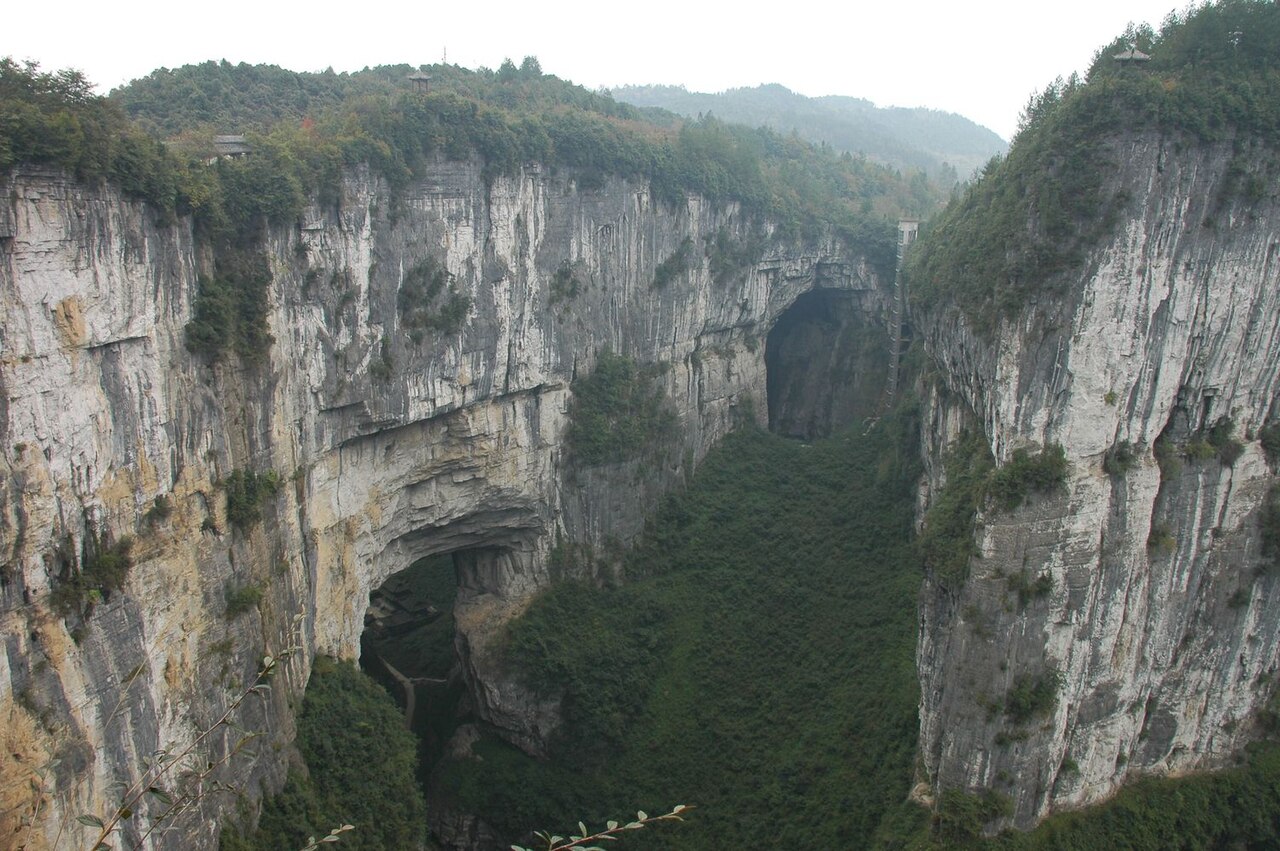
Wulong is a UNESCO-listed karst landscape of sinkholes, natural bridges, and deep green canyons southeast of the city. Its centerpiece is the Three Natural Bridges (天生三桥), three enormous stone arches spanning a canyon that you walk down into by elevator and footpath, past a restored ancient post-station used as a filming location for a Transformers movie and a Zhang Yimou film. Combined with the nearby Xiannv Mountain grasslands and the Longshuixia fissure, it makes a dramatic full-day escape from the city. Since Wulong sits on the 渝厦高铁 line between Chongqing and Zhangjiajie, it works naturally as a stopover on the way east into Hunan.

Neither canyon is a there-and-back: you enter at one end and leave at the other, so everything hinges on the scenic bus (blue), which is included in the ticket. Buy at the visitor centre, ride about 10 minutes to the bridges, drop by lift straight to the canyon floor, walk the 2-hour route out past the three bridges, then take the bus about 30 minutes on to the fissure gorge. That gorge is a one-way descent too (purple, approximate): in through the fissure, through a cave mid-way, out at the lower 地峡, where the bus loops back to the visitor centre — so the whole day never doubles back. The visitor centre is roughly 40 minutes by bus from Wulong railway station, which is off this frame.
What to see
- The Three Natural Bridges (天生三桥)
Three massive limestone arches over a canyon, walked via an elevator down and a trail along the gorge floor. - The Tianfu ancient post-station (天福官驿)
A courtyard building set deep in the canyon, familiar from film and television. - Xiannv Mountain and the Longshuixia fissure (仙女山 / 龙水峡地缝)
Nearby grasslands and a narrow slot canyon, often bundled into a combined ticket.
Caution
The site involves a lot of walking and stairs down into and out of the canyon, so wear proper shoes and pace yourself. It is a long day trip, so consider a tour for the transport and timing, or an overnight near Xiannv Mountain to see more.
Suggested Itineraries
2 Days in Chongqing
Day 1: The peninsula
Spend the day around Jiefangbei, the Eighteen Steps, and the Yangtze cableway. If Liziba matters to you, take Line 2 west for it as a separate detour, then return by metro for Hongyadong as the lights come on and a hotpot dinner.
Day 2: Old town and night view
Ciqikou in the morning for the old lanes and street food, then up to Nanshan in the late afternoon for the gardens and the classic skyline view after dark.
3 to 4 Days: Adding a day trip
Days 1 to 2 as above, then add one or both of the big day trips: the Dazu rock carvings to the west, and the Wulong karst bridges to the southeast. Each is a full day, so pick based on whether you prefer ancient art or dramatic landscape.
Chongqing as a gateway
Chongqing pairs naturally with Chengdu, an hour away by train, for a Sichuan-basin loop, and it is the western starting point for a Yangtze cruise down through the Three Gorges to Yichang. Many travelers use it as the hinge between Sichuan and central China rather than a destination on its own.
Where to Stay
Staying on or near the Yuzhong peninsula around Jiefangbei puts you in the middle of the sights, the food, and the metro. Jiangbei, across the river, is newer and has the airport line and big malls; the south bank trades convenience for skyline views back at the city. Prices below are rough high-season guides; check current rates before booking.
Luxury
- Peninsula and riverside five-stars
International brands around Jiefangbei, Chaotianmen, and the south bank, many with river or skyline views. Often CNY700–2,000+/night.
Boutique
- Design hotels near the old quarters
Smaller stays around Jiefangbei and the restored old-town districts, with more character. Often CNY400–900/night.
Midscale
- Domestic chains (Atour 亚朵, Ji Hotel 全季, and similar)
Reliable and central; look for a property near a metro stop on the peninsula or in Jiangbei. Often CNY250–550/night.
Budget
- Hostels and budget hotels downtown
Cheap, central options around Jiefangbei and Ciqikou, handy for the metro and street food. Often CNY120–300/night.
Where to Eat
- Hotpot everywhere: Chongqing hotpot is the reason to come hungry, a cauldron of chili oil and Sichuan pepper; the city is full of it, from chains to hole-in-the-wall rooms.
- Ciqikou snacks: The old town is a grazing ground for local street snacks, from mahua fried dough twists to spicy skewers.
- Nanshan hillside restaurants: The south-mountain hotpot spots pair fiery food with a skyline view.
- Noodle shops: Chongqing xiaomian, the city’s fiery breakfast noodle, is a daily staple found on nearly every corner.
Dishes to Try
- Chongqing hotpot (重庆火锅): The signature dish, a numbing-spicy broth of chili and Sichuan pepper for cooking meat and vegetables at the table.
- Chongqing xiaomian (重庆小面): A fiery, numbing bowl of noodles in chili-and-pepper sauce, the local everyday breakfast.
- Spicy chicken with chilies (辣子鸡): Fried chicken pieces buried in a mound of dried chilies, a classic to hunt through.
- Mao xue wang (毛血旺): A rich, spicy stew of blood curd, tripe, and vegetables, hearty and intense.
- Suan la fen (酸辣粉): Hot-and-sour sweet-potato noodles, a popular street snack.
- Grilled skewers (烧烤): Late-night street barbecue, a Chongqing institution best eaten outdoors in summer.
Hero photo: Reetu Akkanen, via Unsplash.
Help keep this guide accurate
Found something incorrect, outdated, or missing? Tell us what changed and include a source when possible.
Suggest an update